
Main Courses
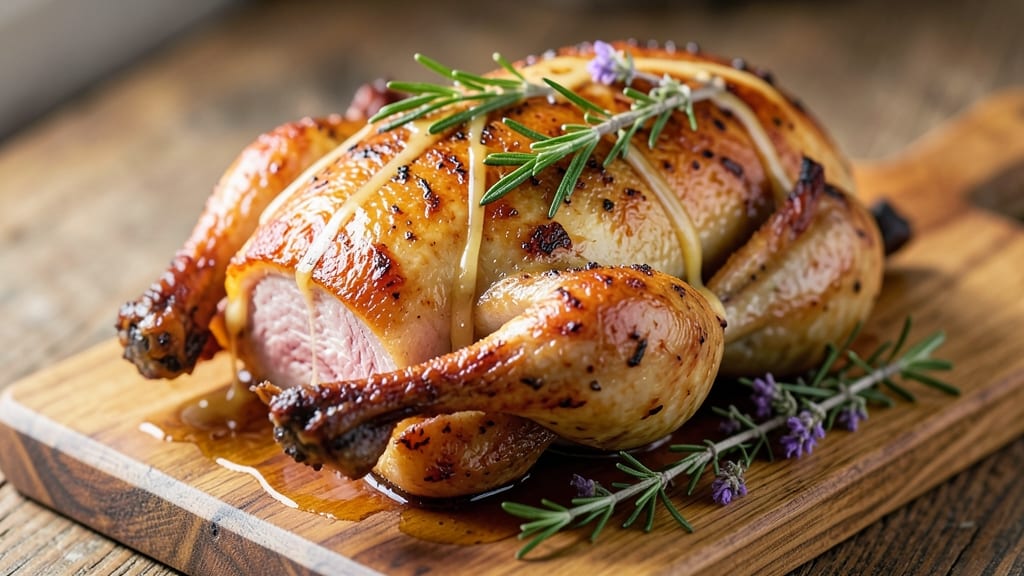
Mastering a juicy whole chicken with golden skin is all about precision—something Alton Brown would approve of after years of perfecting his technique. Growing up in small-town Georgia, I learned that whole roasted chicken isn’t just dinner; it’s a centerpiece that transforms any meal into an event.
The secret lies in balancing herbs, temperature control, and basting at the right moments to lock in moisture while creating that coveted crispy exterior.
This recipe delivers restaurant-quality results with just five simple ingredients and 90 minutes of hands-off time. We start with a dry brine of salt and herbs that penetrates the skin, ensuring flavor reaches every bite.
Roasting at 325°F keeps the meat tender while allowing the skin to render slowly into crisp perfection. The key? Basting every 15 minutes with its own rendered juices—no extra work, just better flavor.
What you’ll end up with is a juicy, golden-brown chicken that’s impossible to resist—tender enough to fall off the bone yet crisp enough to stand up to a fork. The herbs infuse the meat with aromatic depth, while the basting creates a glossy, caramelized skin that’s worth every minute.
This isn’t just chicken; it’s a showstopper that proves whole roasted poultry can be both impressive and effortless.
Serve with roasted root vegetables or a simple herb salad to let the chicken take center stage. Here’s how to make it—Alton Brown-style, with precision and confidence.
Ingredients for alton brown whole chicken
Five essentials for Alton Brown's signature golden, juicy whole roasted chicken.
| Ingredient | Amount | Notes |
|---|---|---|
| Fresh Whole Chicken 🍗 | 4 lb | 3-4 lb bird, giblets removed |
| Diamond Crystal Kosher Salt 🧂 | 2 tbsp | Coarse grain for even coating |
| Fresh Rosemary 🌿 | 1 tbsp | Finely chopped, stems removed |
| Fresh Thyme 🌿 | 1 tbsp | Leaves only, stems discarded |
| Fresh Sage 🌿 | 1 tbsp | Leaves only, chopped |
| Unsalted Butter 🧈 | ½ cup | Cold, cubed for basting |
| Extra-Virgin Olive Oil 🫒 | 2 tbsp | High smoke point preferred |
The chicken is non-negotiable—opt for a 3-4 lb bird with good skin elasticity (press a finger gently; it should spring back). Local butchers or Whole Foods often carry superior quality birds with better marbling. Pat dry thoroughly before seasoning; excess moisture prevents crisp skin. The herbs should be freshly harvested—dried substitutes lack the aromatic complexity. For rosemary, look for vibrant green needles with no brown stems. Thyme and sage should be plump and fragrant; wilted herbs indicate age. If using store-bought, check the pack date—herbs lose potency within 7-10 days of harvest.
No fresh rosemary? Dried at one-quarter the amount works, but the flavor profile shifts subtly. Substitute thyme with oregano at half the quantity for a Mediterranean twist. For butter, ghee works equally well—it has a higher smoke point and adds nutty depth. Olive oil can be swapped for avocado oil if you prefer a milder taste. The salt is critical; Diamond Crystal kosher dissolves evenly, unlike table salt which can create uneven brining. For a salt-free alternative, use 1 tbsp sea salt plus 1 tsp black pepper—though the texture won't be identical. Avoid pre-mixed herb blends; they often contain fillers that dilute flavor.
Store fresh herbs in airtight containers wrapped in damp paper towels for up to 5 days in the refrigerator. The chicken can be prepped 24 hours ahead—pat dry again before roasting. Leftover chicken reheats beautifully; steam for 10 minutes to retain moisture. For crispy skin, broil for 2-3 minutes post-roasting. Portion meat into vacuum-sealed bags for 3 months of freezer storage. The rendered basting butter can be saved in a small jar—perfect for future roasts or toasted bread.
Why You'll Love This Recipe
- No-Fuss Roast: I swear by this method—just a whole chicken, salt, and herbs. That’s it. No basting, no fussing, just 20 minutes of hands-off oven time while I make a salad or pour a glass of wine.
- Herb Bomb Crisp: The rosemary, thyme, and sage under the salt crust? It’s like a flavor explosion when you cut in. That crispy skin hides the most aromatic, savory meat you’ll ever taste—no dryness, no guessing.
- Leftovers That Shine: This chicken stays juicy for days, so I roast one and feed the family for weeks. Shred it for sandwiches, dice it for salads, or throw it in pasta—it’s the ultimate lazy-day hero.
- Budget Weeknight Win: A whole chicken costs less than takeout, feeds four, and leaves zero waste. Honestly, it’s my go-to when I don’t want to break the bank but still crave something impressive. (Yes, even on a Tuesday night.)
Step-by-step instructions for alton brown's whole chicken recipe
This method delivers restaurant-quality results with tender, juicy meat and irresistibly crispy golden skin.
Prepare the Chicken for Maximum Flavor and Crisp
Begin by removing the whole chicken from its packaging and placing it breast-side up on a clean cutting board. Pat the skin completely dry using paper towels—this is absolutely critical for crispy skin. I press firmly, especially under the wings and in the cavity where moisture tends to linger. The drier the skin, the better the browning.
Next, create a simple herb paste by combining the chopped fresh rosemary, thyme, and sage in a small bowl. Add just enough of the extra-virgin olive oil to create a loose, spreadable mixture—about 1 tablespoon should suffice. This paste ensures the herbs adhere directly to the skin rather than falling off during roasting. Spread this mixture evenly over the chicken, including the cavity, then sprinkle the diamond crystal kosher salt generously all over, pressing it into the skin.
Create the Butter Basting Mixture
In a separate small bowl, combine the cold cubed unsalted butter with the remaining 1 tablespoon of extra-virgin olive oil. This mixture will create a flavorful basting liquid that keeps the chicken moist while promoting that golden crust. I like to keep the butter cold initially—this prevents premature melting before it hits the hot oven.
Place the chicken on a wire rack set inside a rimmed baking sheet. The rack elevates the bird, allowing hot air to circulate underneath for even cooking. This is where the magic happens—the combination of the rack and the basting will give you that perfect balance of crispy skin and juicy meat.
Roast at High Heat for Perfect Results
Preheat your oven to 425°F with the rack positioned in the middle. Once preheated, place the prepared chicken in the oven and roast for 1 hour and 15 minutes. During the last 30 minutes of cooking, open the oven door and use a spoon to baste the chicken with the melted butter mixture every 10 minutes. This basting creates steam that keeps the meat moist while the butter adds rich flavor and promotes browning.
You'll know the chicken is perfectly cooked when an instant-read thermometer inserted into the thickest part of the thigh (not touching bone) reads 165°F. The skin should be deep golden brown and crispy, while the juices should run clear when you pierce the thigh. If the skin isn't brown enough, return it to the oven for an additional 5-10 minutes.
Rest and Carve for Juicy Perfection
Remove the chicken from the oven and transfer it to a cutting board. Tent loosely with aluminum foil and let it rest for 15-20 minutes. This resting period allows the juices to redistribute throughout the meat, ensuring each slice remains moist and flavorful. I know it's tempting to cut into it immediately, but resisting this urge makes all the difference in the final texture.
Once rested, carve the chicken by first removing the legs at the joint, then the wings. For the breast, make a horizontal cut along the breastbone and then slice horizontally into ½-inch thick pieces. The result should be tender, juicy meat with crispy, golden skin that's infused with herbaceous flavor from our simple yet effective preparation.
Pro Tips For Making Alton Brown Whole Chicken
- Brine the Night Before: I learned this the hard way—skipping the overnight brine means dry, bland meat. Use 1/4 cup Diamond Crystal kosher salt per quart of water (it dissolves faster than you’d think) and submerge the chicken fully. Cover and refrigerate 12–24 hours; the salt penetrates deep, and the skin stays juicy even with high-heat roasting.
- Trim Fat Before Roasting: Alton’s method relies on crispy skin, but excess fat can steam instead of brown. Pat the chicken very dry with paper towels, then use kitchen shears to snip away any fat deposits larger than a nickel—especially around the neck and tail. This isn’t about making it look perfect; it’s about maximizing that golden crust.
- Rotate the Pan: After the initial sear, resist the urge to peek or move the chicken too soon. Once you flip it to the other side, rotate the pan 180 degrees—not just a simple flip. This ensures even heat distribution and prevents one side from overcooking while the other drags. I used to rush this, and half my chickens ended up lopsided.
- Use a Meat Thermometer: The recipe calls for 165°F in the thickest part of the thigh, but ovens lie. Invest in a cheap instant-read thermometer and pull the chicken when it hits 160°F—it’ll carry over to 165°F while resting. I’ve had guests cut into chicken that’s still pink because I trusted the timer instead. Don’t be that cook.
Make-ahead tips for this alton brown whole chicken
Prep Ahead Strategy
I always prep the chicken 24 hours ahead—pat it dry, apply the herb paste, and refrigerate uncovered on a wire rack. This dry-brining method creates an even salt crust while keeping the skin crisp. Store it in the fridge, uncovered, for maximum evaporation.
The next day, just 30 minutes before roasting, pat it dry again and preheat the oven. This step cuts prep time by half and ensures the skin crisps beautifully. 💪
Herb Prep Shortcut
Make the herb paste 3 days in advance and store it in an airtight container in the fridge. The flavors meld beautifully, and you can use it for multiple roasts. I keep a small jar of this mix in my freezer for last-minute prep.
If you're short on time, use 1 tbsp dried herbs mixed with 1 tbsp olive oil—just know the flavor will be slightly less vibrant. 🌿
Basting Mixture Prep
Combine the butter and olive oil 1 hour before roasting and store it in a small ramekin. Place it in the fridge until you're ready to baste. This keeps the butter cold and prevents it from melting before hitting the oven.
For extra flavor, add ½ tsp minced garlic or ¼ tsp black pepper to the mixture. This prepped basting liquid is ready to go the moment your chicken hits the oven. ⚡
Oven Preheating Hack
Preheat your oven to 425°F while the chicken rests after basting. Use this time to position your wire rack in the middle of the oven—this ensures even heat distribution. I like to place a small baking sheet on the lower rack to catch any drippings.
This step is critical for achieving that golden, crispy skin without drying out the meat. 🌡️
Resting and Storage
After roasting, let the chicken rest for 15-20 minutes before carving. This resting time is non-negotiable—it allows the juices to redistribute, ensuring every bite is moist. For leftovers, store the chicken in an airtight container in the fridge for up to 4 days.
To reheat, cover with foil and bake at 325°F for 20 minutes, or steam for 10 minutes to retain moisture. 💫
Freezer-Friendly Prep
If you're planning ahead, you can even prep the chicken 3 days in advance and freeze it. After applying the herb paste and salt, wrap the chicken tightly in plastic wrap and place it in a freezer bag.
Thaw it in the fridge overnight before roasting. This method works perfectly for meal prep—just add 15 minutes to your cooking time to account for the thawing. 🧊
Nutrition facts
Frequently asked questions
Why does Alton Brown's recipe use a wire rack for roasting?
The wire rack is essential for even cooking and crispy skin. It allows hot air to circulate underneath the chicken, preventing steam buildup that can make the skin soggy. Without it, you risk a less crisp exterior and uneven doneness.
Can I substitute dried herbs for fresh in this recipe?
Yes, but use only one-quarter the amount of dried herbs (e.g., 1 tsp dried rosemary instead of 1 tbsp fresh). Dried herbs lack moisture, so they concentrate flavor differently. For best results, toast dried herbs in a dry pan for 30 seconds before using to enhance their aroma.
What if my chicken skin isn't crispy enough after roasting?
First, ensure you patted the skin completely dry before seasoning—moisture is the enemy of crispiness. If needed, broil the chicken for 2-3 minutes at the end, watching closely to avoid burning. For extra crunch, brush with melted butter before broiling.
How do I know when the chicken is fully cooked?
Use a meat thermometer to check the thickest part of the thigh—it should read 165°F. The juices should run clear when pierced, and the skin should pull away from the meat easily. If unsure, extend cooking by 5-10 minutes rather than risk undercooking.
What's the best way to reheat leftover chicken?
For crispy skin, reheat in a 400°F oven for 10-12 minutes on a wire rack. To retain moisture, steam for 10 minutes or cover with foil and bake at 325°F for 20 minutes. Avoid microwaving—it turns skin rubbery.