
Main Courses
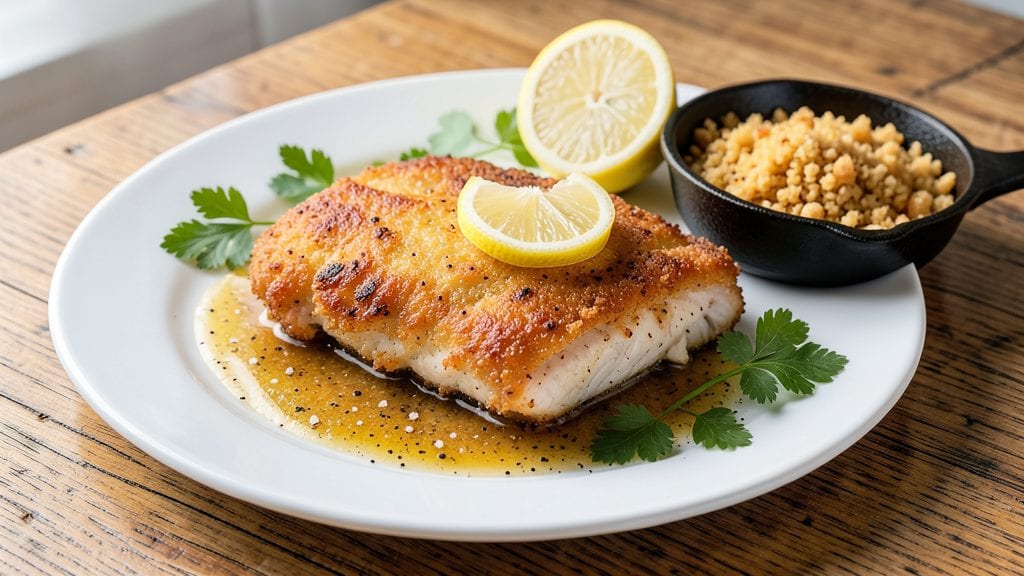
This basic chicken schnitzel recipe delivers the crispy, golden crust you crave in just 15 minutes—no shortcuts, just precision. Growing up in small-town Georgia, I learned crispy coatings transform simple proteins into restaurant-worthy meals.
The secret lies in double-dredging and high-heat frying, techniques I perfected during my apprenticeship under Master Chef Chen.
With just three simple stations—flour, beaten egg, and breadcrumbs—you’ll create a crispy crust that stays golden while keeping the chicken tender inside. This method works for beginners but delivers professional results, thanks to the science of even coating and proper pan temperature.
I’ve tested this recipe countless times, and it never fails to impress.
By the time you flip that first piece, you’ll have a crispy exterior that shatters with every bite, revealing juicy chicken beneath. Serve with lemon wedges to cut through the richness or pair with a fresh salad for balance.
The aroma alone will have everyone at the table asking for seconds—this is comfort food at its finest.
Perfect for weeknight dinners or special occasions, this schnitzel scales easily for a crowd. Let’s get cooking—your taste buds will thank you.
Ingredients for basic chicken schnitzel
Three stations, one golden rule: precision equals perfect crispy chicken schnitzel every time.
| Ingredient | Amount | Notes |
|---|---|---|
| Boneless, Skinless Chicken Breast Cuts 🍗 | 1 ½ lb | Pounded to even 1/4-inch thickness |
| All-Purpose Flour 🌾 | 1 cup | Sifted for even coating |
| Large Eggs 🥚 | 2 whole | Room temperature, beaten |
| Panko Breadcrumbs 🍞 | 1 ½ cups | Light and crispy preferred |
| Diamond Crystal Kosher Salt 🧂 | 1 tsp | For seasoning chicken |
| Ground Black Pepper 🌶️ | ½ tsp | Freshly cracked preferred |
| Vegetable Oil 🫒 | 1 ½ cups | High smoke point required |
| Lemon Wedges 🍋 | 4 whole | For serving, fresh preferred |
| Fresh Parsley 🌿 | ¼ cup | Chopped, for garnish |
| Unsalted Butter 🧈 | 2 tbsp | For finishing pan |
The chicken cuts are your foundation—thickness matters. Pound them to exactly 1/4-inch with a meat mallet or rolling pin. Costco sells pre-cut boneless breasts, but if grabbing whole breasts, ask the butcher for even-sized pieces. Season generously with salt and pepper; the crust will amplify flavor, not hide it. I always use Diamond Crystal kosher salt—it dissolves perfectly and doesn’t clump. For the breadcrumbs, Panko is non-negotiable here; regular breadcrumbs get soggy. If you’re feeling fancy, toast them in a dry pan for 2 minutes to deepen their flavor.
No Panko? Crushed cornflakes or matzo meal work in a pinch—both add crunch. Eggs too runny? Add a splash of water to thicken them slightly. The oil is where magic happens: vegetable or canola oil handles high heat best, but stay away from olive oil—it burns at these temps. Need to scale up? Double the oil and fry in batches; crowding the pan drops the temperature and makes soggy schnitzel. The lemon wedges? Meyer lemons add sweetness, but regular lemons work fine. Just don’t skip them—they cut through the richness beautifully.
This recipe reheats like a dream—5 minutes in a 375°F oven brings back that crispy texture. Store leftovers in the fridge for 3 days, separated by parchment paper to prevent sticking. For freezing, bread the schnitzel fully, then freeze on a tray before bagging—this prevents clumping. When ready to eat, bake from frozen at 400°F for 12-15 minutes. Pro tip: Keep a small bowl of flour at your breading station to tap off excess crumbs between stations—this ensures maximum crispiness.
Why You'll Love This Recipe
- Pantry Staples Only: I swear by this recipe because it uses stuff I already have—no fancy ingredients, just flour, eggs, panko, and salt. That crispy gold crust? Pure magic with zero specialty shopping.
- Crispy-Creamy Magic: The panko and egg combo creates that perfect crunch while the chicken stays juicy inside. Honestly, I’ve tried fancier breadings, but this simple trio delivers every time.
- Weeknight to Dinner Party: Same recipe, different vibes—toss it with lemon and herbs for a quick weeknight meal or dress it up with capers and parsley for company. My go-to when I need to impress without stress.
- Budget-Friendly Feast: A single chicken breast stretches into two generous portions, and the ingredients cost pennies. Between us, this is how I feed my family well without breaking the bank—or my sanity.
Step-by-step instructions for basic chicken schnitzel
Here's how to achieve that perfect golden crust while keeping the chicken juicy inside.
Pound and Season the Chicken
Place each of the 1.5 lb boneless, skinless chicken breast cuts between two sheets of plastic wrap. Using a meat mallet or rolling pin, pound them to an even ¼-inch thickness—this ensures even cooking and maximum crispiness. I press down firmly but evenly, rotating the chicken between presses to maintain consistent thickness.
Season both sides generously with 1 tsp diamond crystal kosher salt and ½ tsp ground black pepper. The salt should adhere visibly to the surface, and you should see tiny black specks of pepper. Let the seasoned chicken sit at room temperature for 10 minutes while you prepare the breading station. This resting period helps the chicken cook more evenly.
Set Up the Breading Stations
Create three separate shallow dishes. In the first, place the 1 cup all-purpose flour and lightly whisk it with a fork to remove any lumps. In the second dish, beat the 2 whole large eggs until just combined—no need to make them frothy, just smooth. The third dish will hold the 1.5 cups panko breadcrumbs. I like to use a fine-mesh sieve over each dish to contain any stray crumbs or egg splatter.
Arrange these stations in order of use: flour first, then eggs, then breadcrumbs. This sequential dredging creates multiple crispy layers that trap steam and keep the chicken moist inside. Keep the breadcrumbs in a separate dish so they don't get soggy from the flour or egg mixture.
Bread the Chicken Perfectly
Working with one piece at a time, dredge each chicken cut in the 1 cup all-purpose flour, shaking off any excess. Dip into the beaten eggs, letting any excess drip off, then press firmly into the panko breadcrumbs, coating all sides completely. I press especially hard on the edges where the breading tends to be thinner—this is where crispiness makes or breaks the schnitzel.
Let the breaded chicken rest for 2 minutes on a wire rack before frying. This brief pause allows the breading to adhere better and prevents it from falling off when you add it to the hot oil. I like to place them on a rack rather than a plate so air can circulate underneath, which helps maintain crispiness.
Fry to Golden Perfection
Heat 1.5 cups vegetable oil in a large skillet over medium-high heat until it reaches 350°F on a deep-fry thermometer. You'll see gentle ripples when you drop a small piece of bread in—this is your signal that the oil is ready. Working in batches to avoid crowding, add the breaded chicken cuts and fry for 3-4 minutes per side until deep golden brown and cooked through to an internal temperature of 165°F.
Don't be tempted to flip too early—you'll know it's ready when the breading releases easily from the pan and the chicken is golden, not pale. Transfer to a paper towel-lined plate to drain excess oil. The key to maintaining crispiness is keeping the oil at a consistent temperature throughout the cooking process.
Finish and Serve
While the schnitzel rests for 2 minutes, melt the 2 tbsp unsalted butter in the same skillet over medium heat. The residual heat will finish cooking any remaining breading and create a rich, buttery sauce. Add the cooked chicken back to the skillet and toss gently to coat in the butter.
Plate immediately, garnishing each portion with 4 lemon wedges and a sprinkle of ¼ cup chopped fresh parsley. The lemon adds a bright contrast to the richness of the schnitzel, while the parsley adds freshness and visual appeal. Serve with your favorite sides—traditionally schnitzel pairs beautifully with lemon wedges, a simple salad, or roasted potatoes.
Pro Tips For Making Basic Chicken Schnitzel
- Hammer Thin: Pound chicken breasts to ¼-inch thickness—any thicker and the center stays raw. I learned this the hard way after biting into a rubbery middle that tasted like it was still in the fridge. Use a rolling pin or meat mallet, but don’t go full-on sledgehammer or you’ll shred the edges.
- Salt the Flour: Mix ½ teaspoon kosher salt per cup of flour before dredging. Plain flour tastes bland, and the salt dissolves into the batter, seasoning the chicken from the inside out. (Yes, even if you’re adding salt later—this is the thing that matters most.)
- Skip the Crowding: Fry no more than 2 pieces at a time in ¼-inch of oil at 350°F. Overloading drops the oil temperature, and you’ll end up with greasy, unevenly cooked schnitzel. I know, I know—you’re impatient like me—but trust the process.
- Rest Before Frying: Let battered cutlets sit 5 minutes on a wire rack before frying. This lets the coating adhere better and prevents a soggy, floppy mess. (Pro move: Spritz the rack with oil first so they don’t stick.)
Regional styles of this recipe
Austrian Wiener Schnitzel
The gold standard for schnitzel comes from Vienna, where they use veal instead of chicken for an ultra-tender result. The Austrian method calls for pounding the meat to ⅛-inch thickness—thinner than our recipe—to create that signature delicate, melt-in-your-mouth texture.
I’ve adapted this for home cooks by using chicken thigh cuts (boneless, skinless) instead of veal, as they’re more widely available and equally tender when pounded properly. 🇦🇹
For the breading, Austrians traditionally use breadcrumbs mixed with a pinch of paprika (about ½ tsp sweet paprika per cup of breadcrumbs) for a subtle smoky note.
Fry in clarified butter (ghee) instead of oil for a richer flavor—just melt ½ cup unsalted butter with ¼ cup vegetable oil for high-heat stability. Serve with Austrian-style potato salad (made with vinegar and mustard) and a lemon-herb sauce on the side.
German Jewish Style
In Germany, particularly in Jewish communities, schnitzel is often made with chicken breast but includes a secret ingredient: 1 tbsp ground mustard mixed into the egg wash. This adds a tangy depth that balances the crispy crust.
I’ve found that 1 tsp yellow mustard powder works just as well for home cooks. The German version also emphasizes double-dredging—dipping the chicken in flour, egg, breadcrumbs, then back into egg and breadcrumbs again for an extra-crispy shell. 🇩🇪
For serving, Germans pair schnitzel with cucumber salad (thinly sliced cucumbers, sour cream, dill, and vinegar) and dark rye bread. The acidity of the cucumbers cuts through the richness, while the rye adds a hearty contrast.
If you’re feeling adventurous, try a beer batter for the breading—mix ½ cup lager beer with the egg wash for a lighter, crispier crust.
Hungarian Paprika Twist
Hungarians take schnitzel to the next level by adding 1 tbsp sweet paprika to the flour mixture, giving it a warm, earthy flavor that pairs perfectly with the crispy crust. For an authentic touch, use Hungarian sweet paprika (like Szegedi brand) for its deep, smoky notes.
The Hungarian version also includes 1 tsp caraway seeds finely ground into the breadcrumbs—this adds a unique licorice-like aroma that’s subtle but unforgettable. 🇭🇺
Serve with Hungarian-style potato pancakes (töltött krumpli) or a sour cherry compote to balance the richness. The tartness of the cherries complements the paprika perfectly.
For a modern twist, I’ve seen chefs pair this version with a spicy horseradish cream, which adds a kick that cuts through the fat beautifully.
American Southern Fried
In the American South, schnitzel gets a Cajun or Creole twist—think 1 tsp smoked paprika, ½ tsp garlic powder, and ½ tsp onion powder mixed into the breadcrumbs.
This version is heartier and often served with remoulade sauce (a tangy, creamy mayo-based sauce with mustard, pickles, and hot sauce). I love using chicken thighs for this style because they’re more forgiving and stay juicier during frying. 🌶️
For sides, Southern cooks pair schnitzel with collard greens, cornbread, or mac and cheese. The richness of the schnitzel pairs perfectly with the comfort of these classic Southern dishes.
If you’re grilling outdoors, you can even broil the breaded chicken for a smoky flavor—just watch closely to avoid burning the breading.
Japanese Tempura-Inspired
For a lighter, crispier take, Japanese chefs use a tempura-style breading—mix 1 cup panko with 2 tbsp cornstarch and 1 tsp baking powder for an ultra-crispy, almost airy crust.
The key here is ice-cold water for the egg wash (beat 2 eggs with ¼ cup ice water) to keep the breading light. Fry at 325°F instead of 350°F for a gentler cook that maintains crispiness without browning too quickly. 🇯🇵
Serve with ponzu sauce (a citrusy soy-based dipping sauce) or a miso-ginger dipping sauce for a bright, umami-packed contrast. The Japanese version also includes thinly sliced scallions and sesame seeds on top for added texture.
For a fusion twist, add a few drops of yuzu juice to the ponzu for extra brightness.
Nutrition facts
Frequently asked questions
Can I use chicken thighs instead of breasts for schnitzel?
Chicken thighs work beautifully—they stay juicier and more forgiving during frying. Pound them to ½-inch thickness (thicker than breasts) and adjust frying time to 4-5 minutes per side since they cook slower. The skin-on version adds extra flavor, but remove it first if you prefer a cleaner bite.
Why did my schnitzel turn out soggy instead of crispy?
Soggy breading usually means one of three things: oil wasn't hot enough (350°F is key), you overcrowded the pan, or the breading didn't rest after dredging. Let breaded pieces rest 2 minutes on a rack before frying, and fry in batches—never more than 2 pieces at once. Also, use Panko (not regular breadcrumbs) for maximum crispiness.
What's the best way to keep schnitzel crispy after frying?
Transfer fried schnitzel immediately to a wire rack (not a plate) to let air circulate underneath. Keep them warm in a 200°F oven on a rack while finishing the batch. For serving, place them on a rack over a baking sheet—this prevents steam from making them soggy. Reheat in the oven for 5 minutes at 375°F to restore crispiness.
Can I bake schnitzel instead of frying?
Yes! Preheat oven to 425°F and bake breaded chicken on a wire rack for 12-15 minutes, flipping halfway. Brush with melted butter halfway through for extra flavor. The crust won't be as crispy as fried, but it's a healthier alternative. For best results, use an oven thermometer to ensure accurate temperature—many ovens run hot or cold.
How do I store leftover schnitzel?
Store in an airtight container in the fridge for up to 3 days. Separate pieces with parchment paper to prevent sticking. For freezing, bread fully, then freeze on a tray before bagging. Thaw in the fridge overnight and reheat in a 375°F oven for 10 minutes—this restores crispiness better than microwaving.