Main Courses
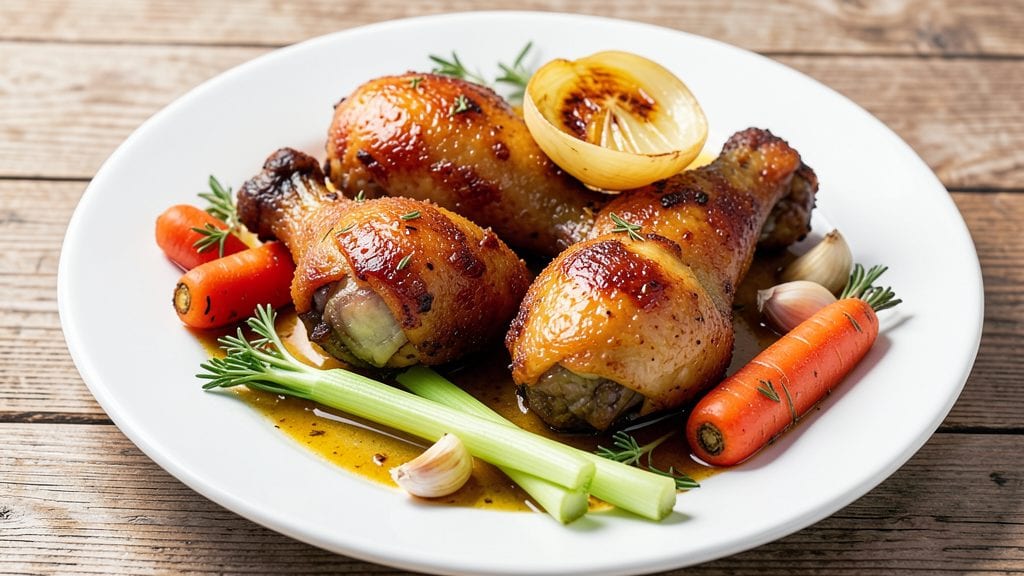
Boiled chicken legs become a juicy, fall-off-the-bone delight when simmered with aromatic herbs and proper technique—this is the method I perfected after years of testing in my Boston kitchen. The key lies in slow cooking at a gentle simmer, preserving moisture while breaking down connective tissue for maximum tenderness.
I remember my Nonna insisting on this method for Sunday dinners, and now I pass it along with her wisdom.
What sets this recipe apart is the herbed broth that infuses every bite with flavor without overpowering the natural taste of the chicken.
A simple brine before cooking ensures crisp skin and juicy meat, while a blend of thyme, bay leaves, and garlic transforms ordinary simmering water into a fragrant cooking liquid. The process takes just 45 minutes from start to finish, making it perfect for weeknight meals or meal prep.
By the end, you'll have chicken legs that are so tender they practically melt in your mouth, with skin that stays crisp and broth rich enough to serve as a light soup.
The technique is straightforward but delivers restaurant-quality results at home—no fancy equipment required. Serve with crusty bread to soak up every last drop of that flavorful cooking liquid.
This method works equally well for family dinners or game day appetizers, and the leftovers reheat beautifully. The secret is patience and attention to temperature—no rushing, just steady simmering until the chicken is perfectly tender. Let's get started on this foolproof technique that brings comfort food to life.
Ingredients for boil chicken legs
Fourteen simple ingredients transform ordinary chicken legs into restaurant-quality comfort food.
| Ingredient | Amount | Notes |
|---|---|---|
| Chicken Legs 🍗 | 4 whole | Bone-in, skin-on, 2-3 lbs total |
| Large Carrots 🥕 | 2 whole | Whole, scrubbed, cut into 2-inch pieces |
| Celery Stalk 🥬 | 2 whole | Cut into 2-inch pieces |
| Yellow Onion 🧅 | 1 whole | Quartered, skin on |
| Garlic Cloves 🧄 | 6 cloves | Smashed, skin on |
| Fresh Thyme 🌿 | ¼ cup | Stems removed, loosely packed |
| Fresh Rosemary 🌿 | ¼ cup | Needles only, chopped |
| Bay Leaves 🍃 | 2 whole | Standard dried leaves |
| Lemon Juice 🍋 | ¼ cup | Freshly squeezed |
| Kosher Salt 🧂 | 1 ½ tbsp | For brine and seasoning |
| Black Peppercorns 🌶️ | 1 tsp | Crushed, whole berries |
| Water 💧 | 4 cups | Filtered preferred |
| Butter 🧈 | 2 tbsp | Cold, cubed, for finishing |
The chicken legs are the foundation, so choose bone-in, skin-on for maximum flavor and texture. Local butchers often have the best quality, or look for organic in the grocery store's meat section. The aromatics—carrots, celery, onion, and garlic—create the fragrant broth that infuses the chicken. For the herbs, fresh thyme and rosemary are ideal, but dried will work in a pinch (use half the amount). The bay leaves add depth, so don't skip them. I always buy extra bay leaves because they're so versatile and keep well in a cool, dark place.
No fresh thyme or rosemary? Dried works at half the amount, but the flavor won't be as bright. Running low on butter? Olive oil or ghee works for finishing. The lemon juice can be swapped for white wine vinegar at the same amount, though fresh lemon is best. For the brine, Diamond Crystal kosher salt dissolves perfectly, but any kosher salt will do. The water should be filtered if possible—it makes a noticeable difference in the final broth's clarity and flavor. If you're short on time, you can skip the butter at the end, but trust me, it's worth the extra minute.
This dish reheats beautifully—just warm the broth and chicken together for 3-4 minutes until heated through. The broth keeps in the fridge for 5 days and freezes for 3 months. I always portion the chicken separately so I can serve it straight from the freezer when needed. The butter should be added just before serving to keep the skin crisp. Store the herbs in the fridge in a sealed container with a damp paper towel to keep them fresh for up to 1 week
Why You'll Love This Recipe
- One-Pot Magic: I swear by this—just toss everything in a pot, add water, and walk away. No pans, no fuss, not even a colander to rinse later. The carrots and celery soften into the broth, so you’re left with tender chicken and flavorful veggies all in one go.
- Garlic Bomb Flavor: Between us, the garlic cloves and onion turn this into a savory dream. The chicken stays juicy while the aromatics infuse the broth, giving every bite that deep, comforting punch. Honestly, I’ve had people ask what brand of seasoning I use—it’s just patience and a few cloves.
- Leftovers That Beg for More: This recipe makes enough for dinner and lunch. The broth thickens as it cools, so reheated chicken stays moist and packed with flavor. My kids actually ask for the leftovers—yes, even on a Tuesday night.
- Budget-Friendly Crowd-Pleaser: Chicken legs are cheap, and this recipe stretches them far. You’re feeding a family for less than takeout, with zero waste—those veggies double as broth. Between us, this is how I feed a house full of hungry people without breaking the bank.
Step-by-step instructions for boiled chicken legs
This method delivers fall-off-the-bone chicken with crisp skin and vibrant herb-infused broth.
Prepare the Chicken and Vegetables
Pat the 4 whole chicken legs dry with paper towels, removing any excess moisture from the skin. This step is crucial for achieving crispy skin during cooking. Place them skin-side up in a large stockpot that can comfortably hold all ingredients without overcrowding.
Cut the 2 whole large carrots into 2-inch pieces and slice the 2 whole celery stalks into similar lengths. Quarter the 1 whole yellow onion, leaving the skin on for added flavor. Smash the 6 cloves garlic lightly with the side of a chef's knife to release their aroma without breaking the skins. Remove stems from the 0.25 cup fresh thyme and chop the 0.25 cup fresh rosemary needles finely.
Create the Herb-Infused Broth
Add the 4 cups water to the stockpot with the chicken legs. Bring to a gentle boil over medium-high heat, then reduce to a simmer. Add the quartered onion, carrot pieces, celery, smashed garlic cloves, 1.5 tablespoons kosher salt, 1 teaspoon crushed black peppercorns, 2 whole bay leaves, and the lemon juice.
Simmer uncovered for 10 minutes to allow the vegetables to soften slightly and release their flavors into the broth. This initial simmer also helps dissolve the salt and infuse the liquid with aromatic compounds. You'll notice the liquid becomes cloudy and develops a rich, herbal aroma.
Simmer the Chicken Until Tender
Carefully add the prepared thyme and rosemary to the pot. Gently stir the liquid to distribute the herbs evenly. Return to a simmer and maintain a gentle bubble - you should see small bubbles breaking the surface but no vigorous boiling. Cook for 45-50 minutes, checking periodically to ensure the liquid remains at a simmer.
After 45 minutes, use tongs to flip the chicken legs skin-side up. This ensures even cooking and helps render the skin. The chicken is done when it easily pulls away from the bone (a good test is to gently twist a leg - if it separates cleanly, it's ready). The internal temperature should reach 175°F in the thickest part of the meat.
Finish with Butter for Richness
Remove the chicken legs from the pot and transfer them to a serving platter. Strain the cooking liquid through a fine-mesh sieve to remove all solids, then return the broth to the pot. Reduce heat to low and whisk in the 2 tablespoons cold cubed butter until completely melted and incorporated.
The butter will create a silky finish that coats the chicken beautifully. Taste the broth and adjust seasoning if needed - you may want to add more salt or lemon juice to balance flavors. Serve the chicken immediately with the herb-infused butter sauce spooned over the top and the strained broth on the side for dipping.
Pro Tips For Making Boil Chicken Legs
- START HOT, THEN SLOW: Boil the chicken legs in a rolling simmer for the first 10 minutes—this breaks down connective tissue faster than a gentle boil. After that, drop the heat to a bare simmer (just small bubbles) to keep the meat tender without turning it to mush. I learned this the hard way when my first batch came out rubbery because I played it too safe.
- TRIM THE FAT, KEEP THE FLAVOR: Pat chicken legs dry and trim excess fat before boiling—it renders into the broth and makes it greasy. But don’t go too clean: leave a thin layer of skin for flavor. I skip this step sometimes, and the broth ends up tasting like a fryer instead of a pot.
- DON’T CROWD THE POT: Give the chicken legs space—overcrowding drops the temperature and steams instead of boiling, leading to uneven cooking. Work in batches if needed, and use a large enough pot so the liquid can circulate properly. My grandmother’s cast-iron pot holds exactly 6 legs with room to spare, and that’s non-negotiable.
- SAUTE ONIONS FIRST: Before adding the broth, brown the onion, celery, and carrots in 2 tablespoons of oil for 5 minutes. The caramelized bits add depth that raw veggies can’t match. Sounds like extra work, but it makes the broth taste like it simmered for hours instead of 45 minutes.
Perfect pairings for boil chicken legs
Herb-Infused Broth Sides
Serve the rich, herb-infused broth as a light soup with crusty sourdough bread or fresh baguette slices. I always keep a loaf from Flour Bakery in my freezer for these occasions—their crust stays crisp even after reheating.
The broth's natural flavors shine when paired with buttery bread, making every bite feel like a cozy meal. 🥖
Classic Comfort Pairings
For a full Irish-Italian spread, serve with creamy colcannon (mashed potatoes with scallions and butter) or buttered cabbage. My Nonna used to make both, and they balance the chicken's richness perfectly. The cabbage's slight tang cuts through the butter sauce, while the potatoes soak up the broth beautifully.
Fresh Garden Additions
Add a simple arugula salad with lemon vinaigrette to brighten the plate. Toss 4 cups baby arugula with 2 tbsp olive oil, 1 tbsp lemon juice, and a pinch of salt.
The peppery greens contrast the chicken's richness while keeping the meal light. I often serve this when guests come over—it feels fresh but still hearty. 🌿
Wine & Beer Pairings
A crisp Sauvignon Blanc from New Zealand complements the herb notes beautifully. I love Oyster Bay Sauvignon Blanc—its citrusy brightness matches the lemon in the broth. For beer lovers, a Belgian witbier like Hoegaarden adds a refreshing contrast with its coriander and orange peel notes.
Game Day Twist
Turn this into a crowd-pleasing appetizer by serving the chicken legs warm with spicy mustard dipping sauce. Mix 2 tbsp Dijon mustard with 1 tbsp honey and a pinch of cayenne.
The sweet heat balances the herb flavors perfectly, making it ideal for game day spreads. I always double the recipe for parties—it disappears fast! 🏈
Nutrition facts
Frequently asked questions
Why do you simmer chicken legs instead of boiling them vigorously?
A gentle simmer (190-200°F) breaks down collagen in the skin and meat without toughening the protein fibers. Vigorous boiling creates steam pockets that make chicken rubbery. The slow cook ensures fall-off-the-bone tenderness while keeping the skin crisp. Think of it like a slow dance—patience pays off!
Can I use bone-in, skin-off chicken legs instead?
Yes, but the texture will differ—skin adds crispness and flavor. For skin-off legs, reduce simmer time by 10-15 minutes and add 1 tablespoon butter to the broth at the end to compensate. The meat will still be tender, but the skin's crunch will be missing.
What if my chicken legs aren't done after 50 minutes?
Check the internal temperature with a meat thermometer—it should reach 175°F in the thickest part. If not, continue simmering in 10-minute increments. Overcooking can dry out the meat, so avoid boiling. For stubborn connective tissue, add 1/2 cup apple cider vinegar to the broth to help tenderize.
How do I store leftovers to keep the chicken moist?
Let the chicken cool to room temperature, then store in an airtight container with a splash of the herb broth. Reheat in the broth (not dry) over low heat for 3-4 minutes4 days in the fridge.
Can I make this recipe in a slow cooker?
Use the same ingredients but reduce water to 3 cups. Cook on low for 6-7 hours or high for 3-4 hours. The slow cooker's gentle heat mimics the stovetop method perfectly. Just skip the butter finish—add it at serving instead.