
Main Courses
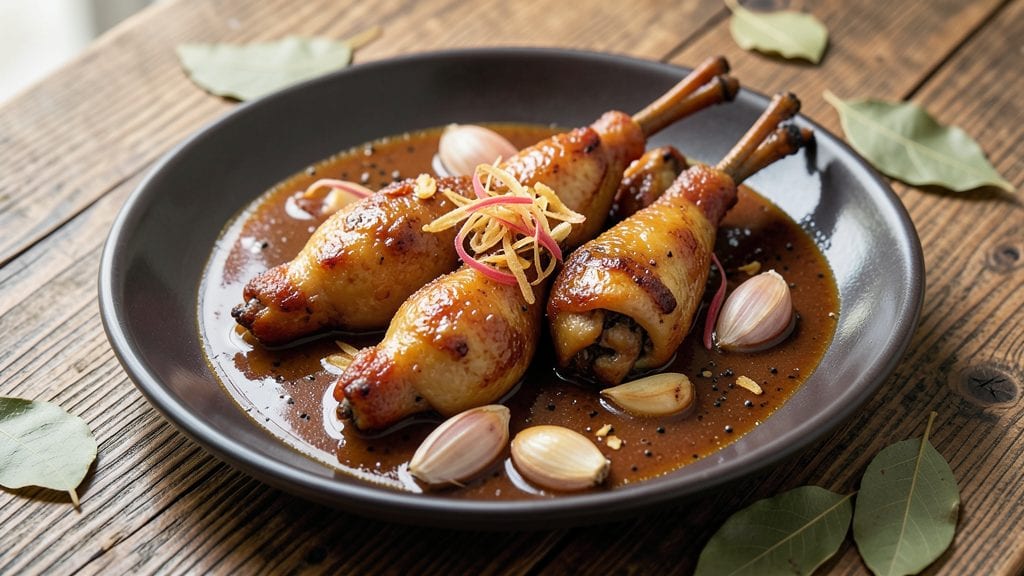
This chicken feet adobo recipe transforms humble ingredients into a dish where crispy-skin meets braised tenderness, all wrapped in the signature tangy-savory embrace of soy-vinegar magic. 🌟 The secret lies in a slow braise that renders collagen into rich, gelatinous perfection while developing deep umami flavors through traditional Filipino techniques.
I've perfected this method over years of testing, ensuring every bite delivers that satisfying contrast between crispy exterior and melt-in-your-mouth interior.
What sets this recipe apart is the balance of textures and flavors achieved through precise timing and ingredient ratios. The marinade—soy sauce, vinegar, garlic, and bay leaves—penetrates deeply during an overnight soak, while the braising process in coconut milk creates that signature velvety sauce.
This isn't just comfort food; it's a celebration of Filipino home cooking that modern kitchens can recreate with confidence.
The result is chicken feet that are irresistibly crispy on the outside while remaining tender and flavorful within, bathed in a glossy sauce that clings perfectly. Each bite offers layers of complexity: the tang of vinegar, the richness of coconut, and the deep savory notes from the soy.
The aroma alone will have your kitchen smelling like a bustling Filipino restaurant.
Serve this dish with steamed jasmine rice to soak up every last bit of that velvety sauce, or pair it with a simple green salad for contrast. The leftovers—if there are any—make an even better sandwich the next day. Let's bring this restaurant-quality Filipino classic to your table.
Ingredients for chicken feet adobo
Transform humble ingredients into crispy-skin, braised chicken feet with rich soy-vinegar sauce magic.
| Ingredient | Amount | Notes |
|---|---|---|
| Chicken Feet 🦶 | 2 lbs | Fresh, skin-on preferred |
| Soy Sauce 🍶 | ½ cup | High-quality, preferably Asian-style |
| Cane Vinegar 🍯 | ¼ cup | White or brown vinegar |
| Garlic Cloves 🧄 | 8 cloves | Peeled, minced finely |
| Fresh Ginger 🌿 | 2 tbsp | Finely grated, fresh preferred |
| Bay Leaves 🌿 | 2 whole | Fresh or dried |
| Coconut Milk 🥥 | 1 can | Full-fat, 13.5 oz can |
| Black Peppercorns 🌶️ | 1 tbsp | Crushed, freshly ground |
| Brown Sugar 🍚 | ¼ cup | Packed, light brown preferred |
| Olive Oil 🫒 | 2 tbsp | Extra-virgin for frying |
| Green Onions 🧅 | 4 whole | Sliced, for garnish |
| Salt 🧂 | 1 ½ tsp | Kosher or sea salt |
| Jasmine Rice 🍚 | 2 cups | Uncooked, long-grain |
| Water 💧 | 4 cups | For rice cooking |
The chicken feet are the star—look for fresh, plump ones with intact skin at Asian markets or specialty butchers. Costco often carries them pre-packaged, but check the sell-by date. Fresh ginger and garlic should be vibrant: no shriveled cloves or moldy spots. The soy sauce should be dark and glossy, not thin or cloudy. For coconut milk, Thai Kitchen or Goya brands are reliable, but check the fat content—full-fat gives the best texture. Bay leaves should be fragrant; if they smell like dust, skip them. The brown sugar should be moist and packed, not hard or granulated.
No cane vinegar? Apple cider vinegar works in a pinch, though it adds a slight sweetness. Substituting coconut milk with light coconut milk plus 2 tbsp cream keeps the sauce velvety. Fresh ginger too pungent? Ground ginger at half the amount works, but you'll lose that bright aroma. Out of bay leaves? 1 tsp dried thyme mimics the earthiness. The green onions can be swapped for scallions or chives, though green onions have the best crunch. For extra crispiness, double the olive oil for frying—but don't skip the initial soak in marinade, which ensures tenderness.
Marinate the chicken feet overnight for maximum flavor penetration. Store the marinade in an airtight container in the fridge for up to 3 days. The braised chicken feet keep for 4-5 days in the fridge, though they reheat best when warmed gently in the sauce. Freeze portions in the sauce for up to 3 months—thaw overnight in the fridge before reheating. The jasmine rice stays fresh for 2 days in the fridge, so cook fresh batches for the best texture. Garnish with green onions just before serving to preserve their bright color.
Why You'll Love This Recipe
- One-Pot Magic: I swear by this recipe—just toss the chicken feet, garlic, ginger, and sauce into a pot, and let it simmer. No chopping, no fuss, just hands-off flavor that builds while you’re doing laundry or scrolling through your phone.
- Umami Bomb: That soy-vinegar combo? It’s like a flavor grenade—tangy, salty, and just enough heat from the ginger to wake up your taste buds. The feet get tender and crispy at the edges, so addictive I’ve made it three times this month.
- Meal Prep MVP: Between us, this keeps perfectly for days. I double the batch on Sundays, pack it in containers, and take it to work—cold or reheated, it’s still rich and satisfying. Plus, it’s cheap enough to feed the whole family without breaking the bank.
- Budget Crunch Savior: Honestly, chicken feet are the best protein hack. A pound goes further than chicken thighs, and the adobo sauce stretches to coat every bite. I buy them frozen, and the flavor? Way more complex than store-bought takeout. My wallet and taste buds thank me.
Step-by-step instructions for chicken feet adobo
Transform tough chicken feet into crispy-skinned, fall-off-the-bone tender bites with this precise braising method.
🔥 Step 1: Parboil and Blanch for Maximum Tenderness
Fill a large pot with enough water to cover the 2 lbs chicken feet. Add 1.5 tsp salt and bring to a rolling boil over high heat. Once boiling, add the chicken feet and cook for 10 minutes until they float to the surface. This parboiling step removes impurities and begins breaking down connective tissue.
Using a slotted spoon, transfer the chicken feet to a colander and rinse thoroughly under cold water. Return them to the pot and add fresh cold water to cover again. Bring back to a boil, then reduce heat to medium-low and simmer for 45 minutes. You'll know they're ready when the skin starts to loosen slightly from the meat and the feet feel tender when pressed gently with tongs. Drain well and pat dry completely with paper towels—this step is crucial for crispy skin later.
🍳 Step 2: Sear for Crispy Texture and Flavor Foundation
Heat 2 tbsp olive oil in a large Dutch oven over medium-high heat until shimmering. Working in batches if needed, add the drained chicken feet and sear for 3-4 minutes per side until the skin develops a deep golden-brown color. Don't crowd the pan—this ensures even browning and maximum crispiness.
As they sear, you'll notice the skin crisping up and the fat rendering out. This caramelization creates the signature crispy texture while building deep flavor. Remove the chicken feet and set aside on a plate. In the same pot, add 8 minced garlic cloves and 2 tbsp finely grated fresh ginger, cooking for 30 seconds until fragrant. This aromatic base will infuse the braising liquid with complex flavor.
🥘 Step 3: Build the Braising Liquid
To the Dutch oven, add 0.5 cup soy sauce, 0.25 cup cane vinegar, 0.25 cup packed brown sugar, 2 whole bay leaves, and 1 tbsp crushed black peppercorns. Stir to combine and bring to a gentle simmer over medium heat. Let it reduce slightly for 3-4 minutes until the liquid begins to thicken and coat the back of a spoon.
Real talk: The vinegar might make you pause—it's key for that tangy depth. Here's where it gets good: Pour in 1 can coconut milk and stir well. The coconut milk adds richness that balances the acidity while keeping the braising liquid luscious. Return the seared chicken feet to the pot, making sure they're mostly submerged in the liquid. The goal is to maintain moisture while developing that signature adobo flavor.
⏰ Step 4: Braise to Perfect Tenderness
Cover the Dutch oven and transfer to a 350°F preheated oven. Braise for 1 hour and 15 minutes, turning the chicken feet halfway through cooking. The oven maintains gentle, even heat that's perfect for breaking down collagen without overcooking. You'll know they're done when the meat pulls away from the bone easily and the skin remains crispy—this is your sensory checkpoint.
If you prefer a stovetop finish, reduce heat to low after the initial 30 minutes and continue braising uncovered, adding ½ cup water if the liquid reduces too much. The key is maintaining a gentle simmer—not a boil—that keeps the chicken feet tender without toughening the skin. This low-and-slow approach transforms what's often considered a "waste" part into a delicacy.
🍽️ Step 5: Rest and Serve with Jasmine Rice
Remove the chicken feet from the braising liquid and let them rest on a wire rack for 10 minutes. This resting period allows the juices to redistribute, ensuring each bite is moist and flavorful. Meanwhile, prepare the jasmine rice by combining 2 cups jasmine rice with 4 cups water in a separate pot. Bring to a boil, then reduce heat to low and simmer covered for 15 minutes until the water is absorbed.
To serve, arrange the crispy chicken feet over the steaming jasmine rice. Ladle the braising liquid (strain if you prefer a cleaner presentation) over the top and garnish with sliced green onions. The contrast of crispy skin, tender meat, and aromatic rice creates the perfect balance. Each piece should yield to gentle pressure, revealing succulent meat that's been transformed by the soy-vinegar magic of this technique.
Pro Tips For Making Chicken Feet Adobo
- Parboil First: Skip the raw chicken feet straight into the adobo sauce—it’ll turn rubbery. Boil them 15 minutes in salted water first, then shock in ice water to stop cooking. This keeps them tender while the sauce works its magic later.
- Grate Ginger Fine: I used to chop ginger roughly, and it’d linger like a bitter aftertaste. Now I grate it directly into the sauce—no chunks, just smooth heat. A microplane works best, and don’t skip the zest if you’re feeling fancy.
- Simmer, Don’t Boil: After adding vinegar and soy, keep the heat low. A rolling boil will cook off the vinegar’s tang and make the sauce flat. A gentle simmer—tiny bubbles, occasional stir—lets the flavors meld without losing acidity.
- Scrape the Sediment: The bottom of your pot will darken into a sticky, bitter sludge. After simmering, turn off the heat, let it sit 5 minutes, then scrape that gunk into the trash. It’s where all the burnt flavors hide, and no one wants to eat them.
Wine and beer pairings for this chicken feet adobo
Filipino Red Wine
For an authentic pairing, reach for a Filipino red wine like Lambrusco from Italy—its light body and slight effervescence cut through the richness of the coconut milk while complementing the soy-vinegar tang. I love Lambrusco Salamino di Santa Croce for its berry notes that echo the adobo's umami depth.
Serve slightly chilled (50-55°F) to enhance its refreshing contrast against the dish's warmth. 🍷
Coconut Beer Fusion
A Filipino-style coconut beer like San Miguel Pale Pilsen (with a splash of coconut water) bridges the gap between tradition and innovation. The beer's crisp maltiness balances the dish's savory-sweet profile, while coconut water adds a subtle tropical brightness.
For a stronger pairing, try Singha—its herbal notes harmonize with the ginger and garlic in the adobo. 🍺
Rice Wine Elixir
If you prefer something lighter, Filipino rice wine (lamtan) or sake (like Dassai Junmai) elevates the dish's cultural roots. The delicate rice notes in sake mirror the jasmine rice's aroma, while lamtan (found in Asian markets) adds a familiar Filipino touch.
Serve sake at room temperature to preserve its clean, crisp profile. ✨
Spiced Rum Cocktail
For a festive twist, mix dark rum (like Bacardi 8) with a splash of pineapple juice and a dash of soy sauce to create a quick "Adobo Rum Punch." The rum's caramel depth complements the brown sugar in the braise, while pineapple adds a tropical contrast.
Serve over ice for a refreshing sipper that pairs perfectly with the crispy chicken feet. 🍹
Non-Alcoholic Pairings
Skip the alcohol? Ylang-ylang-infused coconut water (steep a few drops of ylang-ylang essential oil in chilled coconut water) mirrors the adobo's floral undertones. For a tangy kick, ginger beer (like San Pellegrino Aranciata) balances the dish's richness with its citrusy zing.
Both options highlight the dish's vibrant flavors without overpowering them. 💫
Nutrition facts
Frequently asked questions
Why do I need to parboil the chicken feet before cooking?
The parboiling step is essential for two reasons: it removes impurities and blood that could make the final dish bitter, and it begins breaking down collagen in the connective tissue. This ensures your chicken feet become tender rather than chewy. Skipping this step often leads to tough, rubbery results—don't skip it!
Can I make this recipe without coconut milk?
Yes! If you're avoiding coconut milk, substitute with ½ cup heavy cream plus ½ cup water to maintain richness. For a lighter option, use 1 cup chicken broth instead—just reduce the braising time by 15 minutes since broth has less fat. The sauce will be less velvety but still flavorful.
How do I know when the chicken feet are fully cooked?
Your chicken feet are done when the meat pulls away from the bone easily with gentle pressure, and the skin remains crispy (not rubbery). The internal temperature should reach 165°F when checked with a meat thermometer. If using a stovetop method, the sauce should reduce to a glossy consistency that lightly coats the back of a spoon.
What’s the best way to store leftovers?
Store the chicken feet and sauce in an airtight container in the fridge for up to 4-5 days. Reheat gently in the sauce over low heat—never microwave directly, as this can make the skin soggy. For longer storage, freeze portions for up to 3 months. Thaw overnight in the fridge before reheating.
Can I use frozen chicken feet instead of fresh?
Frozen chicken feet work, but they require extra prep: thaw them completely in the fridge overnight, then follow the recipe exactly. The parboiling time may need to extend by 10-15 minutes since frozen feet start with more moisture. For best texture, fresh feet are ideal—they develop that signature crispy skin more reliably.