
Soups & Stews
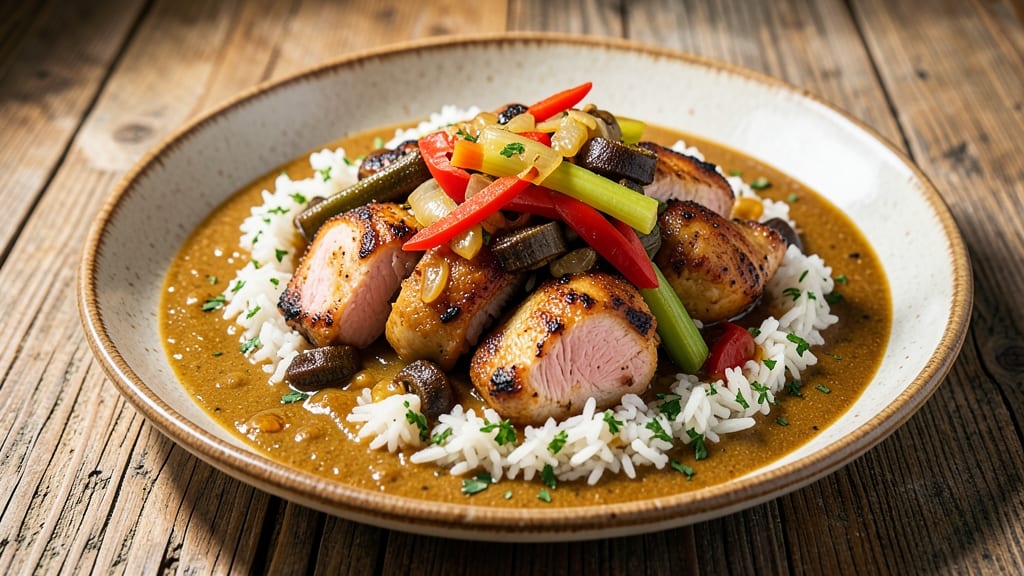
This chicken gumbo recipe brings the soul of Louisiana to your kitchen with its rich, smoky depth and layers of flavor built on a perfect dark roux. The secret lies in patience—letting that roux develop its signature nutty aroma before introducing the holy trinity of onions, celery, and bell peppers.
I’ve refined this recipe over years of trial and error, ensuring the chicken stays tender while absorbing the deep, savory broth.
The foundation of any great gumbo is the roux, which takes time but transforms ordinary ingredients into something extraordinary. You’ll start with equal parts fat and flour, cooking them slowly until they reach a deep mahogany color—this is where the magic happens.
The three-ingredient secret? A splash of hot water to cool the roux, a pinch of filé powder for earthy depth, and a bay leaf to infuse subtle floral notes that elevate the entire dish.
What you’ll end up with is a bowl of smoky, hearty gumbo where each spoonful delivers tender chicken, okra-thickened broth, and the perfect balance of spices. The roux’s rich flavor carries through every bite, while the holy trinity adds brightness and freshness.
This isn’t just a recipe—it’s a taste of tradition, served with crusty bread to soak up every drop of that velvety, flavor-packed liquid.
Serve it with hot sauce on the side and a sprinkle of fresh parsley for color, and you’ve got a dish that’s as impressive as it is comforting. Perfect for gatherings or a cozy night in, this gumbo is the kind of meal that makes people ask for seconds.
Let’s get cooking—your kitchen will smell like home before the first bite.
Ingredients for chicken "gumbo
Pantry staples meet Louisiana magic—just 18 ingredients for a dish that tastes like home.
| Ingredient | Amount | Notes |
|---|---|---|
| Unsalted Butter 🧈 | 1 cup | High-fat content for rich roux |
| All-Purpose Flour 🌾 | 1 cup | White flour preferred for roux |
| Boneless Chicken Thighs 🍗 | 2 ½ lb | Dark meat stays moist |
| Yellow Onion 🧅 | 1 ½ whole | Diced for holy trinity |
| Celery Stalks 🥬 | 3 whole | Diced, with leaves included |
| Green Bell Pepper 🍅 | 1 whole | Diced for holy trinity |
| Garlic Cloves 🧄 | 4 cloves | Minced for depth |
| Okra Pods 🌱 | 1 lb | Fresh or frozen works |
| Diced Tomatoes (Canned) 🍅 | 1 can | San Marzano preferred |
| Chicken Broth 💧 | 4 cups | Low-sodium preferred |
| Bay Leaves 🌿 | 2 whole | For subtle floral notes |
| Dried Thyme 🌿 | 1 tsp | Or 1 tbsp fresh thyme |
| Paprika 🌶️ | 1 tbsp | Smoked variety preferred |
| Filé Powder 🌱 | 2 tbsp | For earthy thickness |
| Hot Sauce 🌶️ | 2 tbsp | For serving, optional |
| Fresh Parsley 🌿 | ¼ cup | Chopped for garnish |
| Salt 🧂 | 1 ½ tsp | Adjust to taste |
| Black Pepper 🌶️ | ½ tsp | Freshly ground |
The butter and flour are non-negotiable for that perfect dark roux. Use unsalted butter—salted can alter the flavor balance. I grab Land O'Lakes unsalted from the store, but any good-quality brand works. For the flour, White Lily is my go-to because it's bleached and gives that perfect golden-brown roux. The chicken thighs? Buy bone-in, skin-on for extra flavor, but boneless works too. Look for thighs with good marbling—Kroger or Whole Foods usually have great options. The holy trinity (onion, celery, bell pepper) should be fresh—no wilting or bruising. Trader Joe's has pre-diced holy trinity mixes that save time, but chopping your own gives better flavor.
No filé powder? Cornstarch or arrowroot powder will thicken, but it won’t have that earthy gumbo taste. Short on okra? A roux made with a little extra flour (like 1 tbsp more) will help thicken, but okra gives that authentic texture. The canned tomatoes? San Marzano is ideal, but any good-quality diced tomatoes work. For the broth, low-sodium is key—you’ll be adding salt later. The bay leaves add subtle floral notes, but if you’re out, a pinch of dried thyme works in a pinch. Smoked paprika gives that signature gumbo depth, but regular paprika works if that’s all you’ve got. The filé powder is a must—it’s what gives gumbo its signature thickness and earthy flavor. Penzeys sells it, but you can also find it in the international aisle at most grocery stores.
This gumbo tastes even better the next day—let it sit overnight so all the flavors meld. Store leftovers in the fridge for 4-5 days or freeze for up to 3 months. I like to portion it into containers so I can grab a bowl for lunch all week. The roux can be made ahead and stored in the fridge for up to 3 days in an airtight container. Just reheat it gently before adding the rest of the ingredients. The filé powder should be added last—it thickens when it hits the liquid, so don’t mix it in until the very end. Serve with crusty bread and hot sauce on the side for that authentic gumbo experience.
Why You'll Love This Recipe
- One-Pot Magic: I swear by this recipe because it’s all in one pot—no extra bowls, no extra pans. Just brown the chicken thighs in butter, toss in the flour, and the roux starts building itself while you chop onions and celery. By the time you stir in the broth, the house smells like a Cajun dream.
- Thighs Win Every Time: Between us, chicken thighs are the MVP here—juicy, flavorful, and they stay tender even when simmered. That crispy edge from the butter and flour? It’s the kind of texture that makes you pause mid-bite, and honestly, that’s the moment you know you’ve nailed it.
- Weeknight to Potluck: This gumbo works for lazy Tuesday dinners and Sunday gatherings. Double the batch, freeze half, and reheat it later—no one will guess it’s not fresh. Plus, serve it over rice or with crusty bread, and suddenly you’re the hero of any meal.
- Budget-Friendly Feast: Chicken thighs and celery are cheap, but they pack a punch. A pound of thighs and a bunch of celery stretch further than you’d think, especially when you bulk it up with rice. Leftovers? They’re even better the next day—trust me, I’ve tested this.
Step-by-step instructions for chicken gumbo recipe
Here's the method that delivers a rich, smoky gumbo with that perfect roux foundation.
Build the Perfect Dark Roux
Melt the 1 cup unsalted butter in a heavy-bottomed pot over medium heat. Once it's completely melted and foaming subsides, whisk in the 1 cup all-purpose flour all at once. This is where the magic happens - you're creating a roux that will form the base of your gumbo.
Stir constantly with a wooden spoon or whisk, breaking up any lumps as they form. The roux will lighten in color before it starts to darken. Here's the crucial part: keep stirring and watch carefully as it transforms from peanut butter color to chocolate brown, then finally to a deep, rich coffee color. This should take about 30-40 minutes. The key is patience - don't rush this step or your gumbo will taste bitter. You'll know it's perfect when it smells nutty and rich, and has that beautiful dark mahogany color.
Sauté the Holy Trinity and Brown the Chicken
Once your roux has reached that perfect dark color, immediately add the diced 1.5 whole yellow onion, 3 whole celery stalks, and 1 whole green bell pepper. Stir well to coat everything in the roux. Cook for 5-7 minutes until the vegetables begin to soften and the roux starts to thicken.
Add the 2.5 lb boneless chicken thighs and cook for another 5 minutes, stirring occasionally. The chicken should begin to brown slightly. Now add the minced 4 cloves garlic, 1 tsp dried thyme, 1 tbsp paprika, 1.5 tsp salt, and 0.5 tsp black pepper. Stir everything together and cook for another 2 minutes, allowing the spices to toast slightly and release their aromas.
Simmer the Gumbo with Okra and Tomatoes
Pour in the 1 can diced tomatoes (with juices) and stir to combine. Cook for 5 minutes until the tomatoes break down slightly. Add the 1 lb okra pods and stir well. The okra will help thicken the gumbo naturally as it cooks.
Pour in the 4 cups chicken broth and add the 2 whole bay leaves. Bring the mixture to a gentle boil, then reduce heat to low. Let it simmer uncovered for 45-60 minutes, stirring occasionally. You want the liquid to reduce slightly and the flavors to meld together. The gumbo should have a thick, stew-like consistency by the end of this time.
Finish with Filé Powder and Fresh Herbs
Remove the gumbo from heat and discard the bay leaves. In a small bowl, whisk together the 2 tbsp filé powder with 1 cup of the gumbo's cooking liquid until smooth. Slowly stir this mixture back into the gumbo, whisking constantly. The filé powder will thicken the gumbo instantly - this is the three-ingredient secret that makes gumbo so special.
Stir in the chopped 0.25 cup fresh parsley. Taste and adjust seasoning if needed. The gumbo should be rich, flavorful, and perfectly thick. Let it sit off the heat for 10 minutes before serving to allow the flavors to settle. Serve hot with rice and a dash of 2 tbsp hot sauce on the side if desired.
Pro Tips For Making Chicken "Gumbo
- Cook Thighs Separately: Remove the chicken thighs before making the roux—skip the temptation to toss them in early. Browning them first in a separate pan with a little oil gives them crispy edges and deeper flavor, while keeping the roux from turning into a gluey mess.
- Sweat, Don’t Sauté: When cooking the onions and celery, keep the heat low and cover the pot for 5 minutes. This "sweating" softens them without browning, so they melt into the gumbo instead of staying crunchy (yes, even if you’re impatient like me).
- Stir Constantly, Early: The first 5 minutes of roux-making are the most critical—don’t walk away. Stirring nonstop with a wooden spoon prevents burning, and if it starts to darken too fast, immediately reduce the heat. A light peanut-butter color is your goal, not a brick.
- Deglaze with Liquid: After removing the chicken, scrape up those browned bits in the pan with a splash of water or stock. It’s easy to ignore, but those bits hold flavor, and skipping this step means losing depth in your gumbo. (Your future self will notice.)
Essential equipment for this recipe
Heavy-Bottomed Pot
Gumbo demands a heavy-bottomed pot—I recommend a 5-6 quart Dutch oven like the Lodge 5.5 Qt Cast Iron Dutch Oven or All-Clad Stainless Steel Dutch Oven. The cast iron distributes heat evenly and retains it perfectly during the long roux-cooking process, preventing scorching.
For non-stick convenience, a Calphalon Nonstick Dutch Oven works well too, though it lacks the same heat retention. 🌡️
Wooden Spoon & Whisk
A wooden spoon (like the OXO Good Grips Wooden Spoon) is essential for stirring the roux—it won’t scratch your pot and won’t burn like metal.
For smoother mixing, keep a balloon whisk (such as OXO Good Grips Balloon Whisk) nearby to break up lumps in the flour or filé powder mixture. Avoid silicone or plastic utensils—they can melt or degrade with prolonged high heat.
Immersion Thermometer
An immersion thermometer (I use the ThermoWorks Thermapen ONE) ensures your gumbo reaches the ideal 165°F internal temperature for safe chicken. It also helps monitor the roux’s progress—aim for 375°F at the peak of its dark mahogany phase.
This precision prevents burning or undercooking, especially when simmering for 45-60 minutes. A budget-friendly option is the Taylor Precision Products Instant-Read Thermometer.
Fine-Mesh Strainer
A fine-mesh strainer (like the OXO Good Grips Strainer) is handy for skimming any foam from the roux or straining the gumbo if you prefer a smoother texture. It’s also useful for rinsing fresh okra or washing herbs before chopping.
For extra smoothness, I sometimes blend a portion of the gumbo and strain it back in, but this is optional.
Chef’s Knife & Cutting Board
Invest in a sharp chef’s knife (I swear by the Wüsthof Classic 8-inch) and a stable cutting board (like the John Boos End Grain Maple Board) for dicing the holy trinity evenly.
Precision here ensures balanced flavors—overly large chunks won’t soften properly, while tiny pieces can turn mushy. A mandoline (such as the OXO Good Grips Mandoline) speeds up prep but requires careful handling.
Lid & Tongs
Keep a fitted lid (often included with Dutch ovens) to cover the gumbo while simmering, trapping steam and flavors. A pair of kitchen tongs (like OXO Good Grips Tongs) helps remove chicken pieces without breaking them up.
For serving, I recommend slotted spoons to let guests scoop up rice with gumbo clinging to the chicken. 💫
Nutrition facts
Frequently asked questions
Why does gumbo need such a long cooking time for the roux?
The dark roux is the soul of gumbo, and it develops its rich, nutty flavor through slow cooking. The 30-40 minutes of constant stirring transforms the flour and fat into a complex base that carries the entire dish. Rushing this step creates a bitter taste, while patience rewards you with that signature smoky depth. Think of it as the foundation of your gumbo's flavor pyramid.
Can I substitute filé powder if I can't find it?
Yes! While filé powder gives gumbo its signature earthy thickness, you can use 2 tablespoons cornstarch or arrowroot powder mixed with 1 cup of gumbo liquid as a substitute. However, the flavor won't be identical—filé powder's unique taste comes from ground sassafras leaves. For best results, try to find it in specialty stores or online.
What's the best way to store leftover gumbo?
Store gumbo in an airtight container in the fridge for 4-5 days or freeze it for up to 3 months. The flavors actually improve overnight! When reheating, warm it gently on the stove over low heat and stir frequently to prevent scorching. Never microwave directly from frozen—thaw it first in the fridge.
Can I make gumbo without okra?
Okra adds texture but isn't essential. For a similar thickening effect, use 1 extra tablespoon of flour in the roux or add 1 cup of diced tomatoes to help build body. The gumbo will still be delicious—just slightly less traditional. Some cooks also use 1/4 cup cornmeal as a substitute for okra's natural thickening power.
How do I know when my roux is done?
Your roux is perfect when it reaches a deep mahogany color and smells rich and nutty. The color should be darker than chocolate milk but not burned—it should look like melted chocolate. If it starts to smoke or smell acrid, it's gone too far. The key is constant stirring and watching closely during the final 10 minutes of cooking.