
Appetizers
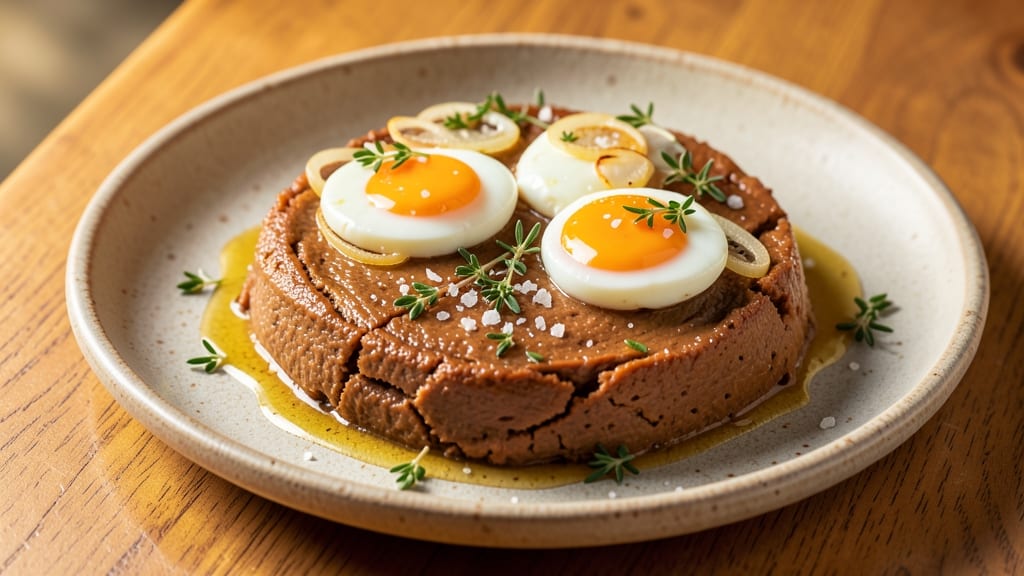
Mastering chicken liver pâté with egg transforms humble ingredients into a velvety, restaurant-worthy spread that takes just 20 minutes—no fancy equipment required. Growing up in small-town Georgia, I learned how offal could become a centerpiece when handled with precision, and this recipe proves it.
The key lies in balancing rich liver with creamy eggs while keeping the texture impossibly smooth.
What sets this recipe apart is the technique: gently cooking the livers until just tender, then blending them with raw eggs for that signature silky consistency.
I add a touch of butter and shallots for depth, but the magic happens when the mixture chills—transforming from a raw batter into a luxurious, spreadable pâté. This isn’t just an appetizer; it’s a conversation starter that elevates any gathering.
By the time it’s ready, you’ll have a pâté so rich and velvety it could pass for foie gras, served on toasted baguette slices or crackers. The eggs bind everything together while adding a subtle custard-like quality that makes each bite irresistible.
Whether you’re hosting a dinner party or simply craving something sophisticated, this recipe delivers professional results without the fuss.
For safety, handle raw livers carefully, and avoid overcooking the eggs to maintain that perfect balance of creaminess. Garnish with fresh herbs or a drizzle of olive oil for extra flair. Let’s create something extraordinary from simple ingredients—just like my grandmother used to do in her Georgia kitchen.
Ingredients for chicken liver pate with egg
Precision-cut ingredients for a luxurious pâté that rivals foie gras in texture and depth.
| Ingredient | Amount | Notes |
|---|---|---|
| Chicken Livers 🍗 | 1 lb | Fresh, trimmed of connective tissue |
| Large Eggs 🥚 | 4 whole | Room temperature, pasteurized if preferred |
| Unsalted Butter 🧈 | 4 tbsp | European-style preferred for flavor |
| Shallots 🧅 | 2 whole | Finely minced, about 0.25 cup |
| Fresh Thyme Leaves 🌿 | 1 tbsp | Or 1 tsp dried thyme |
| Diamond Crystal Kosher Salt 🧂 | ½ tsp | Adjust to taste |
| Freshly Ground Black Pepper 🌶️ | ¼ tsp | Cracked peppercorns preferred |
| Extra-Virgin Olive Oil 🫒 | 2 tbsp | For cooking livers |
| Dry White Wine 🍷 | ¼ cup | Sauvignon Blanc recommended |
| Heavy Cream 🥛 | ¼ cup | Full-fat for richness |
| Fresh Chives 🌱 | 2 tbsp | Finely chopped, for garnish |
| Baguette Slices 🍞 | 8 pieces | Toasted for serving |
| Cornstarch 🌾 | 1 tsp | For thickening if needed |
The chicken livers are the foundation—freshness is critical as they oxidize quickly. Source them from a reputable butcher or grocery store's seafood/liver section (they're often near the fish counter). Look for vibrant red color and minimal connective tissue—trim any visible membranes or fat. For optimal flavor, European-style butter like Plugrá or Kerrygold adds nuanced richness. The shallots should be firm and pale purple—no green shoots. Fresh thyme from a trusted supplier like Penzeys or your local farmers market elevates the herbal notes. If using dried thyme, measure precisely—it's more potent than fresh.
No white wine? Chicken stock with a splash of lemon juice works equally well, though the acidity won't be identical. Substitute heavy cream with crème fraîche or sour cream for tangy depth, though texture may vary slightly. For the eggs, pasteurized eggs are safest if serving to vulnerable populations, though fresh eggs yield superior texture. The chives can be swapped for tarragon or parsley if unavailable—tarragon pairs particularly well with liver. When mincing shallots, a microplane yields finer texture than a knife, though both methods work. For the baguette, day-old bread toasts more evenly than fresh.
Livers should be used within 24 hours of purchase for peak flavor. Store them in an airtight container lined with paper towels to absorb moisture, and refrigerate until ready to use. The pâté mixture can be prepared up to 2 days ahead—chill it completely before sealing in an airtight container. For longer storage, portion into small ramekins and freeze for up to 3 months. When reheating, warm gently in a water bath to maintain silky texture. The toasted baguette slices can be prepared in advance and reheated in a 350°F oven for 5 minutes before serving.
Why You'll Love This Recipe
- No Chopping Chaos: I’ll admit it—mincing shallots can feel like a chore, but these two whole shallots are so easy to handle. Finely dice them in under 5 minutes, and you’re done. No fancy knife skills required, just a quick chop and you’re building that rich, savory base with the wine reduction. Trust me, the texture pays off without the stress.
- Creamy, Umami Bomb: The secret? That perfect balance of seared chicken livers, velvety eggs, and a splash of Sauvignon Blanc. The wine reduction caramelizes the shallots into something sweet and deep, while the heavy cream and butter make it so smooth it’s like eating liquid gold. Honestly, the first bite will have you forgetting liver pate ever needed intimidation.
- Weeknight Hero: Forget takeout. This pate comes together in under 30 minutes—sear the livers, reduce the wine, blend, and boom. It’s the kind of dish that disappears in a flash, especially with toasted baguette slices waiting to soak up every last bit. My kids even ask for seconds (yes, even on a Tuesday night).
- Budget-Friendly Luxury: Chicken livers are one of the most affordable protein sources out there, and this recipe stretches them into something ridiculously impressive. A pound of livers, some eggs, butter, and wine? That’s less than a fancy takeout order, but the flavor? Chef’s kiss. It’s the kind of meal that makes you feel fancy without breaking the bank.
Step-by-step instructions for chicken liver pate with egg
Here's the method for creating a velvety, restaurant-quality liver pate that transforms humble ingredients into an elegant spread.
Sear the Chicken Livers Until Perfectly Browned
Pat the 1 lb chicken livers completely dry with paper towels—this ensures they brown beautifully rather than steam. Heat the 2 tbsp extra-virgin olive oil in a large skillet over medium-high heat until shimmering. Add the livers in a single layer and cook undisturbed for 2-3 minutes per side until they develop a deep mahogany crust and release easily from the pan.
Real talk: Don't overcrowd the pan or they'll steam instead of sear. If any livers release blood, wipe the pan clean with a paper towel before adding fresh batches. Once browned, transfer the livers to a plate and set aside—you'll notice they'll continue cooking slightly from residual heat.
Build the Flavor Base with Shallots and Wine
In the same skillet (no need to clean it—the browned bits add depth), reduce heat to medium and add the 2 finely minced shallots. Cook for 3-4 minutes until softened and translucent, stirring occasionally. Pour in the ¼ cup dry white wine and scrape up any fond from the bottom of the pan with a wooden spoon.
Simmer the wine mixture for 2-3 minutes until reduced by half—this concentrates the flavors. The shallots should be completely tender with no bite remaining. Here's the thing—if you skip this reduction step, your pate will taste flat and one-dimensional.
Create the Silky Egg Mixture
In a separate bowl, whisk together the 4 large eggs (room temperature) with the ¼ cup heavy cream until fully combined. Add the 4 tbsp unsalted butter, cut into small pieces, and whisk vigorously until the butter is completely melted and the mixture is smooth and pale yellow. Season with the ½ tsp diamond crystal kosher salt and ¼ tsp freshly ground black pepper.
This is the moment that matters: The butter should be fully incorporated, creating an emulsion that will give your pate its signature richness. If you see any butter lumps remaining, continue whisking until smooth. The mixture should coat the back of a spoon but still flow easily.
Blend and Thicken the Pate
Working quickly, add the seared chicken livers and shallot-wine mixture to the egg mixture. Using an immersion blender, blend until completely smooth—this is where the magic happens. For a perfectly silky texture, blend in short bursts, scraping down the sides of the bowl as needed. If the mixture is too thin after blending, stir in the 1 tsp cornstarch mixed with 1 tbsp cold water until you reach a spreadable consistency.
I know it seems weird, but trust me—the cornstarch slurry is the secret to that professional pate texture. The pate should be thick enough to hold its shape when spread but still glide smoothly off the spoon. Fold in the 1 tbsp fresh thyme at the end for a bright herbal note that cuts through the richness.
Serve with Toasted Baguette and Fresh Chives
Transfer the pate to a serving dish and smooth the top with a spatula. Chill for at least 1 hour before serving to allow flavors to meld and the texture to firm up slightly. Toast the 8 baguette slices until golden and crisp, then arrange them on a platter alongside the pate.
Garnish generously with the 2 tbsp finely chopped fresh chives just before serving. The contrast between the warm, crusty bread and cool, velvety pate makes each bite unforgettable. Serve immediately with additional chives on the side for those who prefer their pate extra fresh.
Pro Tips For Making Chicken Liver Pate With Egg
- Don’t Rush the Butter: DESCRIPTION: Whisk the 4 tbsp unsalted butter into the egg mixture until it’s fully melted and the emulsion turns pale yellow—no streaks, no lumps. I used to think "mostly melted" was fine, but those butter bits turn your pate grainy. Take the extra 30 seconds to get it silky, or you’ll regret it when you taste it.
- Cook Shallots Low and Slow: DESCRIPTION: Those 2 minced shallots need 3-4 minutes on medium heat until they’re soft and translucent, not crisp or browned. If you crank the heat, they’ll burn before they sweeten, and your pate will taste bitter. Sounds boring, but trust me—this is where the flavor hides.
- Test Livers for Doneness: DESCRIPTION: Cut into one seared liver after 2 minutes—it should be just barely pink in the center. Overcook them, and they’ll turn to rubber. Undercook them, and you’ll risk bacteria. A quick slice tells you when to flip the batch, not the timer.
- Chill Before Serving: DESCRIPTION: Skip the hour in the fridge, and your pate will be too soft to spread neatly. Let it firm up slightly—this also lets the thyme and wine flavors marry. Cold pate tastes richer, too. (Yes, even if you’re impatient like me.)
Common mistakes when making this dish
Overcooking the Livers
This is the most common mistake I see—livers turning from rich and tender to rubbery and unappetizing. Cook them only 2-3 minutes per side at medium-high heat until they develop a deep mahogany crust.
Overcooking releases bitter compounds and destroys that velvety texture we're chasing. Trust me, the residual heat will carry them through—no need to push it. 🔥
Skipping the Wine Reduction
The wine reduction is what transforms this from a bland liver mixture into something complex and layered. When you skip reducing the ¼ cup white wine by half, you're left with a flat, one-dimensional flavor.
Don't be tempted to rush this step—it's what gives your pate that elegant depth. The caramelized fond from the pan adds depth you can't replicate any other way.
Raw Eggs Without Emulsion
Raw eggs are the secret to that silky texture, but they need to be properly emulsified with the 4 tbsp butter. If you don't whisk until the butter is completely melted and the mixture coats the back of a spoon, you'll end up with a grainy, uneven texture.
I've seen home cooks give up here, but trust the process—it's worth the effort. The emulsion is what makes this dish feel luxurious.
Blending Too Long
This might seem counterintuitive, but blending the mixture in long continuous bursts can break down the liver fibers too much, creating a paste-like consistency instead of that perfect spreadable texture. Work in short bursts, 10-15 seconds at a time, scraping down the sides as you go.
This controlled approach preserves the delicate structure of the livers while achieving that velvety smoothness.
Underseasoning the Mixture
The eggs and cream already provide richness, but the liver itself needs seasoning to shine. Many home cooks underestimate the importance of the ½ tsp kosher salt and ¼ tsp black pepper—these are what bring out the natural flavors of the liver.
Taste as you go, but remember that the flavors will develop more as it chills, so don't be afraid to add a little extra salt if needed. Balance is key here.
Serving Too Soon
This is where many people mess up—rushing to serve the pate immediately after blending. The mixture needs to chill for at least 1 hour to allow the flavors to meld and the texture to firm up slightly.
Serving it too soon results in a runny, unappetizing spread that lacks the proper body. Patience is everything when it comes to pâté—trust the process and let it develop its full potential. ✨
Nutrition facts
Frequently asked questions
Why does this recipe use raw eggs?
The raw eggs create the signature silky, custard-like texture that makes this pâté so luxurious. The eggs emulsify with the butter and liver, binding everything together for that velvety consistency. Trust the process—it's what gives this dish its professional restaurant quality!
Can I make this pâté ahead of time?
The mixture can be prepared up to 2 days ahead and chilled before serving. For longer storage, portion into ramekins and freeze for up to 3 months. Just thaw overnight in the fridge before serving. The flavors actually improve with time!
What if my pâté turns out too runny?
Mix 1 tsp cornstarch with 1 tbsp cold water and stir it in until you reach a spreadable consistency. This is the secret to achieving that perfect, professional texture. The pâté should hold its shape when spread but still glide smoothly.
Can I substitute the white wine with something else?
Yes! If you don't have white wine, use ¼ cup chicken stock with 1 tsp lemon juice for similar acidity. The reduction step is key—it's what adds depth to your pâté. Don't skip it for the best flavor!