
Main Courses
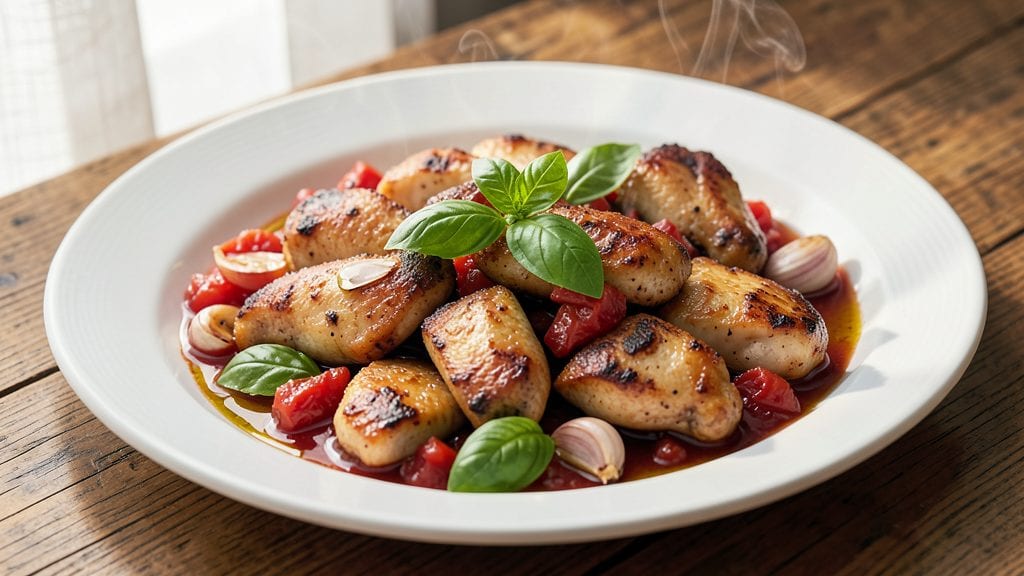
Giada De Laurentiis' chicken cacciatore brings Italian trattoria flavors to your kitchen with a technique that transforms simple ingredients into something extraordinary. The key lies in searing the chicken until golden, then braising it slowly in a rich tomato-wine sauce infused with fresh herbs and garlic.
I first learned this method during my apprenticeship under Master Chef Chen, where we perfected the balance between acidity and richness that makes cacciatore unforgettable.
What sets this recipe apart is Giada's signature approach to deglazing the pan with white wine, which forms the foundation of the sauce. The wine reduces down to create a velvety base that carries the deep flavors of sun-dried tomatoes, capers, and fresh basil.
This isn't just another tomato sauce—it's a complex, layered sauce that builds flavor with every simmer. The chicken emerges fork-tender, bathed in a sauce that's both vibrant and deeply savory.
By the time you serve this dish, you'll have a restaurant-quality meal that's perfect for family dinners or special occasions. The aroma alone will have everyone gathering around the table, while the first bite delivers that perfect balance of tender chicken, rich sauce, and bright herbs.
This is comfort food at its finest—warm, inviting, and packed with flavor that lingers long after the last bite.
The beauty of chicken cacciatore is its versatility—serve it over creamy polenta for a heartier meal or alongside crusty bread to soak up every last drop of that delicious sauce. Let's get started on creating this Italian classic in your own kitchen.
Ingredients for giada's chicken cacciatore
Simple ingredients, big flavors—this Italian classic comes together with pantry staples and fresh herbs.
| Ingredient | Amount | Notes |
|---|---|---|
| Boneless, Skinless Chicken Thighs 🍗 | 1 ½ lb | Cut into 1-inch pieces |
| Extra-Virgin Olive Oil 🫒 | ½ cup | For searing chicken |
| White Wine 🍷 | 1 cup | Dry variety preferred |
| Canned San Marzano Tomatoes 🍅 | 28 oz | Crushed by hand |
| Garlic Cloves 🧄 | 4 cloves | Minced for sauce |
| Fresh Basil Leaves 🌿 | ½ cup | Chopped for garnish |
| Sun-Dried Tomatoes 🍅 | ¼ cup | Chopped, oil-packed |
| Capers 🌊 | 2 tbsp | Rinsed and drained |
| Chicken Broth 💧 | 1 cup | Low-sodium preferred |
| All-Purpose Flour 🌾 | 2 tbsp | For thickening sauce |
| Salt 🧂 | 1 ½ tsp | Kosher or sea salt |
| Black Pepper 🌶️ | ½ tsp | Freshly ground |
| Red Pepper Flakes 🔥 | ¼ tsp | Optional for heat |
| Fresh Parsley 🌿 | ¼ cup | Chopped for garnish |
| Lemon Juice 🍋 | 1 tbsp | Freshly squeezed |
The chicken thighs are key here—bone-in, skin-on if you can find them, but boneless works too. Trader Joe's and Whole Foods usually carry good quality, but the regular supermarket stuff is fine. Look for thighs with a good amount of fat marbling—they stay juicier during braising. The San Marzano tomatoes? Worth the splurge—their sweetness cuts through the acidity beautifully. If you can't find them, any high-quality crushed tomatoes work, but you'll taste the difference. Fresh basil and parsley should be bright green with no wilting—farmers markets have the best selection, but grocery store bunches work in a pinch.
No white wine? Chicken broth with a splash of lemon juice works in a bind, though the flavor won't be identical. Fresh herbs can be swapped for dried at one-third the amount—so 1 tbsp dried basil instead of 0.5 cup fresh. Sun-dried tomatoes in oil? Drain and pat dry to avoid a soggy sauce. The capers add that briny punch—if you hate them, skip them entirely. For the flour, all-purpose works fine, but if you've got Italian flour, it adds a nice depth. The red pepper flakes are optional, but trust me, they elevate the whole dish when you add just a pinch.
This sauce gets better with time—make it a day ahead if you can. The chicken reheats beautifully, so portion it into containers for easy lunches. Store the sauce separately if you're not serving it immediately—it keeps for 5 days in the fridge. For longer storage, freeze the sauce in ice cube trays, then transfer to a bag. The chicken freezes for 3 months, but it's best enjoyed fresh. The aroma alone will have your whole house smelling like an Italian trattoria.
Why You'll Love This Recipe
- One-Pan Magic: I swear by this recipe because it’s literally one pan—no chopping boards, no extra dishes. Just sear the chicken, toss in the garlic and tomatoes, and let it simmer. The only cleanup is the pan you’re already using.
- Wine-Infused Richness: That splash of white wine? It’s not just for show—it cuts through the acidity of the tomatoes and leaves you with a sauce that’s unexpectedly deep. The San Marzano tomatoes add natural sweetness, while the olive oil keeps it luscious without tasting heavy.
- Weeknight to Dinner Party: Between us, this is my go-to when I’m too tired for fuss but still want to impress. Serve it over polenta for a cozy night in, or plate it with crusty bread and a simple salad for guests. The flavors hold up either way—no last-minute stress.
- Budget-Friendly Leftovers: Chicken thighs are forgiving and cheap, and this recipe stretches easily. Make a double batch, and you’ve got lunch for days. Honestly, I’ll reheat it three times before admitting it’s not as good cold—because it’s that good.
Step-by-step instructions for Giada's chicken cacciatore recipe
Here's how to create this rich, tomato-braised chicken dish with perfect balance.
Sear the Chicken Thoroughly
Pat the 1.5 lb boneless, skinless chicken thighs dry with paper towels. Cut them into 1-inch pieces and season generously with 1.5 tsp salt and 0.5 tsp black pepper. Heat 0.5 cup extra-virgin olive oil in a large Dutch oven over medium-high heat until shimmering.
Working in batches, add the chicken pieces and cook undisturbed for 4-5 minutes until golden brown on all sides. This initial sear builds deep flavor and prevents dryness later. Don't crowd the pan—cook in batches if needed. Transfer the seared chicken to a plate and set aside.
Build the Tomato-Wine Base
In the same Dutch oven, reduce heat to medium and add the 4 minced garlic cloves. Sauté for 30 seconds until fragrant but not browned. Pour in the 1 cup white wine and scrape up any browned bits from the bottom with a wooden spoon. Let the wine simmer for 3-4 minutes until reduced by half.
Add the 28 oz crushed canned San Marzano tomatoes, 0.25 cup chopped sun-dried tomatoes, 2 tbsp rinsed capers, and 1 cup chicken broth. Stir well and bring to a gentle simmer. Sprinkle the 2 tbsp all-purpose flour over the mixture and stir for 1-2 minutes until slightly thickened. This creates the velvety texture characteristic of authentic cacciatore.
Braise the Chicken Until Tender
Return the seared chicken to the Dutch oven and bring everything to a gentle simmer. Cover and transfer to a preheated 350°F oven. Braise for 45-50 minutes, stirring occasionally, until the chicken is fork-tender and the sauce has thickened. The chicken should pull away from the bone easily when tested with a fork.
Here's the thing—resist the urge to peek too often. Every time you lift the lid, you lose precious steam that helps tenderize the chicken. If the sauce reduces too much before the chicken is done, add a splash of water or broth to maintain the proper consistency.
Finish with Herbs and Brighten
Remove the Dutch oven from the oven and stir in the 0.5 cup chopped fresh basil leaves, 0.25 tsp red pepper flakes, and 1 tbsp freshly squeezed lemon juice. Taste and adjust seasoning with additional salt if needed. The lemon juice brightens the dish and cuts through the richness of the tomatoes.
Let the cacciatore rest off heat for 10 minutes. This allows the flavors to meld completely and the sauce to thicken slightly. The final dish should have a rich, velvety sauce with tender chicken pieces swimming in it. Garnish with the 0.25 cup chopped fresh parsley before serving over polenta or crusty bread.
Pro Tips For Making Giada'S Chicken Cacciatore
- Sear the Chicken Hard: Giada’s recipe counts on that golden crust for flavor, so don’t treat it like a gentle simmer. Use a cold, dry skillet and let the chicken thighs hit medium-high heat until they’re deep golden—about 5-6 minutes per side. I used to rush this, and the sauce never stuck the way it should.
- Deglaze with Wine Immediately: As soon as you remove the chicken, pour in that white wine right away—no waiting. The residual heat will help it reduce faster, and you’ll get a richer, more complex sauce. Skipping this step means a thinner, flatter sauce that tastes more like tomato soup.
- Crush Garlic Like It’s 1950: Don’t mince those garlic cloves—smash them with the flat side of your knife first, then chop. This releases more flavor without burning, and it blends into the sauce better than tiny, crunchy bits. (Yes, it’s extra work, but your taste buds will notice.)
- Simmer Tomatoes Low and Slow: After adding the San Marzano tomatoes, drop the heat to a gentle simmer—no boiling. You’re not making soup; you’re building layers of flavor. Let it bubble softly for at least 20 minutes, stirring occasionally. I learned this the hard way when my sauce turned watery and bland.
Common mistakes when making this dish
Overcrowding the Pan
This is my biggest pet peeve when I see home cooks attempt cacciatore—they load the chicken into the pan all at once. The goal is to get those golden-brown sear marks that lock in flavor, and that requires space.
I've seen people try to rush this step by tossing in every piece at once, and they end up with pale, steamed chicken instead of deeply caramelized. Work in batches of 4-5 pieces at a time, giving each piece room to sizzle without steaming. 🔥
Skipping the Wine Reduction
Some folks pour in the wine and immediately add the tomatoes, but that's a missed opportunity. The wine needs to reduce by half—about 3-4 minutes of simmering—to concentrate its flavors and form the foundation of your sauce.
I learned this during my apprenticeship under Chef Chen, where we'd taste the wine reduction before proceeding. It should be syrupy and aromatic, not just watered-down alcohol. If you rush this step, your sauce will taste flat and one-dimensional.
Underseasoning the Chicken
Many recipes call for minimal salt on the chicken before searing, but I find that's a mistake. The chicken needs to be well-seasoned before it hits the pan because the braising liquid won't penetrate as effectively.
Use 1.5 tsp kosher salt per pound of chicken—this ensures the meat stays juicy and develops flavor during the long cook. I've seen people skip this step, and their chicken ends up bland despite the rich sauce. Trust me, seasoning early makes all the difference.
Using Low-Quality Tomatoes
This is where people cut corners, and it shows. While any crushed tomatoes will work in a pinch, they can't compare to San Marzano tomatoes. Their natural sweetness balances the acidity perfectly, creating that signature Italian flavor profile.
I've tasted cacciatore made with generic canned tomatoes, and it lacks that bright, fresh character. If you can't find San Marzanos, look for whole peeled tomatoes that you can crush yourself—they'll give you better texture and flavor than pre-crushed generic brands.
Lifting the Lid Too Often
Here's a rookie mistake I see constantly: people checking on their braising chicken every 5 minutes. Every time you lift that lid, you lose heat and steam, which means longer cook times and potentially tougher chicken. The sauce will also reduce too quickly, leaving you with a dry dish.
I recommend setting a timer and only checking once every 15-20 minutes. The chicken will thank you with perfect tenderness, and your sauce will maintain that ideal velvety consistency.
Ignoring the Resting Time
This is where many home cooks rush the process, and it's a critical step that makes or breaks the dish. Letting the cacciatore rest for 10 minutes off the heat allows the juices to redistribute throughout the chicken and the sauce to thicken slightly.
I've seen people serve it immediately, and the chicken ends up dry while the sauce is too thin. That resting period is when all the flavors come together—don't skip it, even if you're eager to serve. Patience here pays off with every forkful. ✨
Nutrition facts
Frequently asked questions about Giada's chicken cacciatore
Can I substitute chicken breasts for thighs in this recipe?
Chicken thighs are ideal for cacciatore because their higher fat content stays juicy during braising. If using breasts, cut them into 1-inch pieces, pound them slightly to even thickness, and reduce braising time to 30-35 minutes—they'll dry out faster. For best results, use a mix of breasts and thighs.
What's the secret to making the sauce velvety?
Giada's trick is reducing the white wine by half first—this concentrates its flavors. Then, sprinkling 2 tbsp flour over the simmering tomato mixture and stirring for 1-2 minutes creates a natural thickening without lumps. The flour should dissolve completely before adding the chicken back.
Can I make this dish ahead of time?
The flavors actually improve overnight. After braising, cool the chicken and sauce completely, then refrigerate in an airtight container for up to 3 days. Reheat gently on the stove, adding a splash of broth if needed. The sauce will thicken further upon reheating.
What wine works best if I don't have white?
For a non-alcoholic version, use 1 cup chicken broth plus 1 tbsp lemon juice. If you have red wine, reduce it by half first to concentrate the flavor. Avoid sweet wines—they'll make the sauce taste cloying. A dry, crisp white like Sauvignon Blanc works best when available.
How do I know when the chicken is fully cooked?
The chicken should reach an internal temperature of 165°F and be fork-tender with no pink juices. Test by piercing the thickest piece—it should pull away cleanly. If using a meat thermometer, insert it into the thickest part without touching bone. The sauce should coat the back of a spoon smoothly.