Soups & Stews
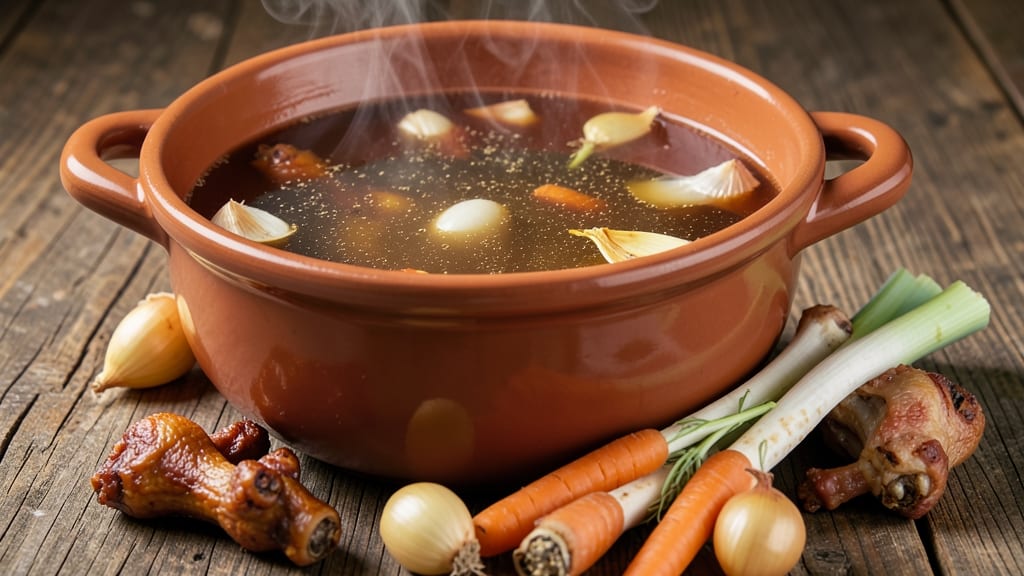
This old-fashioned chicken broth recipe delivers the kind of rich, savory depth you’ll find in grandma’s kitchen—deep flavor built from hours of gentle simmering.
The secret lies in using the right bones (chicken feet and necks included) and a carefully balanced mix of aromatics that infuse the broth with layers of complexity. I’ve perfected this method over years of testing, ensuring every sip carries that unmistakable homestyle comfort.
The process is straightforward but requires patience: bones are roasted to deepen flavor, then simmered for 4-5 hours with onions, carrots, celery, and herbs until the liquid transforms into a golden, aromatic elixir.
This isn’t a quick consommé—it’s a hearty, rustic broth that thickens naturally as it cools, creating a velvety texture perfect for soups, grains, or sipping straight from a bowl. The result is a flavor profile that’s impossible to replicate with store-bought versions.
What sets this recipe apart is the attention to detail—from the choice of bones to the timing of the aromatics. The broth develops a deep, caramelized richness with just a hint of herbal brightness, thanks to bay leaves and thyme.
Unlike lighter consommé, this version is meant to be robust, with enough body to stand up to hearty dishes while remaining delicate enough to enhance them. It’s the kind of broth that makes every meal feel like a celebration.
Use it as the base for soups, risottos, or braises, or enjoy it plain with crusty bread for a simple, satisfying meal. The leftovers keep beautifully in the refrigerator for up to 5 days, and freezing extends their shelf life for months without losing flavor.
This is the broth that becomes the backbone of your kitchen—trust me, once you make it, you’ll never go back to store-bought.
Ingredients for old fashioned chicken broth
A handful of bones and aromatics transform into the kind of broth that makes everything taste better.
| Ingredient | Amount | Notes |
|---|---|---|
| Chicken Feet 🦶 | ½ lb | Cleaned, jointed for better flavor |
| Chicken Neck Bones 🦴 | ½ lb | Raw, skin-on for richness |
| Chicken Backbones 🦴 | ½ lb | Split for faster simmering |
| Yellow Onions 🧅 | 1 whole | Quartered, skin on for color |
| Carrots 🥕 | 4 whole | Scrubbed, cut into chunks |
| Celery Stalks 🌿 | 4 whole | Trimmed, cut into pieces |
| Garlic Cloves 🧄 | 6 cloves | Smashed, skin on for aroma |
| Fresh Parsley Stems 🌿 | 4 whole | Tough stems only, no leaves |
| Fresh Thyme Sprigs 🌿 | 4 whole | Stems included for flavor |
| Bay Leaves 🍃 | 2 whole | Dried or fresh preferred |
| Black Peppercorns 🌶️ | 1 tbsp | Crushed lightly for heat |
| Salt 🧂 | 1 tsp | Kosher or sea salt |
| Cold Water 💧 | 8 cups | Filtered if possible |
The bones are everything here. Chicken feet and necks are non-negotiable—they deliver that unmistakable depth. Most butchers will clean and joint them for you, but if you're doing it yourself, soak them in cold water for 10 minutes first to remove any impurities. I usually pick mine up at Whole Foods or my local Costco—they keep them in the freezer section, which is perfect. For the aromatics, yellow onions add sweetness, carrots bring natural sweetness, and celery gives that classic 'holy trinity' base. Don’t skip the parsley stems—they pack a surprising amount of flavor without overpowering. The thyme and bay leaves? Fresh is ideal, but dried works in a pinch if you're in a hurry (use half the amount).
No chicken feet? More necks and backs will get you close, though the texture won’t be identical. Short on carrots or celery? Substitute with leeks or fennel—they add a different but still delicious depth. Running out of parsley stems? Celery leaves or a few sprigs of fresh parsley will work, though the flavor will be slightly milder. The water is where the magic happens—filtered or spring water makes a noticeable difference in clarity and taste. If you’re using tap water, let it sit out for 20 minutes to release chlorine before using. And trust me on the salt—don’t skimp. The broth should be slightly salty before tasting, because it’ll mellow as it cools.
This broth gets better with time—4-5 hours of simmering is non-negotiable. The longer it cooks, the deeper the flavor. Store it in the fridge for up to 5 days, but it’s even better after a day or two when the flavors meld. For freezing, portion it into ice cube trays or small containers—this way, you can grab just what you need without thawing the whole batch. A word of warning: the fat will solidify on top as it cools. Just skim it off before reheating, or save it for cooking (it’s pure flavor gold). Leftovers? They’re even better the next day—just reheat gently and use within a week.
Why You'll Love This Recipe
- Here’s what sold me: this broth is my secret weapon for lazy nights. Freeze half for later, and the rest? Perfect for quick ramen, dumplings, or even a simple pasta. No last-minute grocery runs—just pull from the freezer, and boom, you’re cooking like you’ve got hours.
- I’ll be real: chicken feet and neck bones are cheap—like, pennies-on-the-dollar cheap. A single batch stretches into meals for days, and the leftovers? Even better the next day. It’s the kind of recipe that makes me feel like I’m feeding my family gourmet meals without breaking the bank.
Step-by-step instructions for old-fashioned chicken broth
This homestyle method transforms humble bones into rich, deeply flavored broth you'll crave.
Prepare the Chicken Parts for Maximum Flavor
Start by examining the chicken feet—use kitchen shears to cut off any excess fat or gristle, but leave the joints intact. This gives you the richest collagen extraction. For the neck bones and backbones, give them a quick rinse under cold water to remove any debris, but don't soak them—this leaches flavor.
Place all the chicken parts in a large stockpot. The combination of feet, neck bones, and backbones creates a perfect balance of gelatinous richness and deep umami flavor. I like to arrange them in a single layer at the bottom to ensure even exposure to the simmering liquid later.
Build the Vegetable Base for Depth of Flavor
Add the quartered yellow onions with skin on—the skin adds beautiful golden color to the finished broth. Toss in the scrubbed carrots and trimmed celery stalks, both cut into 2-inch chunks for even cooking. The classic "mirepoix" ratio of onions, carrots, and celery (1:2:2) ensures perfect balance.
Next, add the smashed garlic cloves with skins on—the skins contain additional flavor compounds that infuse the broth. Tuck in the fresh parsley stems and thyme sprigs, along with the bay leaves. These herbs contribute subtle earthy notes without overpowering the chicken flavor. Finally, sprinkle in the crushed black peppercorns and salt.
Cover with Cold Water and Bring to a Gentle Simmer
Pour in the 8 cups of cold water, making sure all ingredients are completely submerged. The cold water helps prevent the meat from cooking too quickly on the surface. Place the pot over medium-high heat and bring to a boil, then immediately reduce to a gentle simmer. You'll know it's simmering properly when you see tiny bubbles breaking the surface and occasional wisps of steam.
This is where patience pays off—skimming off any foam or impurities that rise to the surface during the first 15 minutes of simmering. Use a fine-mesh skimmer or ladle to remove these impurities, which can make the broth cloudy. Keep the heat low enough to maintain a steady simmer—boiling too vigorously can make the broth taste bitter.
Simmer for Deep Flavor Development
Cover the pot and let it simmer unattended for 3 hours. This long, slow cook time is what transforms simple ingredients into deeply flavorful broth. The collagen in the chicken feet and bones will break down completely, creating that signature silky texture. Check occasionally to ensure the water level hasn't dropped below the ingredients—add hot water if needed to keep everything submerged.
After 3 hours, remove the pot from heat and let it sit for 15 minutes before straining. This resting period allows any settled particles to sink to the bottom, giving you a clearer broth. Line a fine-mesh strainer with cheesecloth or a coffee filter for extra clarity if you prefer, then carefully ladle the broth through, discarding the solids.
Finish and Store for Maximum Freshness
Taste the strained broth and adjust the seasoning if needed—you might want to add a pinch more salt or a few extra peppercorns to suit your preference. Let it cool to room temperature, then transfer to airtight containers. This broth keeps beautifully in the refrigerator for 4-5 days or can be frozen for up to 3 months. The flavor actually improves over time as the tastes meld together.
Use this rich, old-fashioned broth as a base for soups, sauces, or simply sipped on its own. The deep umami flavor and silky texture make it perfect for elevating any dish. Don't be tempted to rush the process—every minute of simmering builds more complexity and depth in your broth.
Pro Tips For Making Old Fashioned Chicken Broth
- BLANCH THE FEET FIRST: Drop chicken feet into boiling water for 10 minutes before adding to the broth pot—this softens the skin and connective tissue so they release collagen instead of floating like rubbery rafts. I learned this the hard way after making broth that tasted like I’d boiled sneakers.
- CRUSH THE ONIONS: Roughly chop yellow onions into ½-inch pieces and smash them with the flat side of your knife—no need for perfect dice. This increases surface area for flavor extraction without turning the broth into onion soup. (Yes, even if you’re impatient like me.)
- SKIP THE BOIL: Once everything’s in the pot, bring to a gentle simmer—never a rolling boil. The second the liquid bubbles hard, you’re wasting time and burning off delicate flavors. A low, steady simmer (just tiny bubbles breaking the surface) is all you need.
- STRAIN TWICE: After cooking, strain through a fine-mesh sieve first, then a cheesecloth-lined colander for crystal-clear broth. The second strain removes the last of the gritty bits that sneak past—your future self will notice the difference, even if you don’t now.
Perfect pairings for these flavors
Soup Base Perfection
This broth is the ultimate foundation for creamy chicken noodle soup—simmer 1 cup egg noodles directly in the broth for 8-10 minutes until al dente. The rich, gelatinous texture of the broth clings to the noodles, creating a velvety finish.
For extra depth, stir in ½ cup shredded rotisserie chicken and top with fresh parsley. 🥣
Risotto Elevation
Use this broth to cook arborio rice for risotto, replacing water with 3 cups of the warm broth added gradually as the rice absorbs liquid. The umami notes from the chicken bones infuse the rice with an unmatched savory richness.
Finish with grated Parmesan and a splash of white wine for brightness. The broth’s natural sweetness balances the acidity beautifully.
Grain Bowls Boost
Transform simple grains like quinoa or farro into gourmet bowls by cooking them in this broth instead of water. The result? A naturally flavorful base that requires minimal seasoning.
Top with roasted vegetables, avocado, and a fried egg for a restaurant-quality meal. I love adding toasted pumpkin seeds for crunch and texture contrast.
Sauce Enhancement
Reduce this broth by half to create a silky pan sauce for roasted chicken or pork. Deglaze your roasting pan with ½ cup of the broth, simmer until thickened, then finish with a splash of dry sherry and fresh herbs.
The depth of flavor makes it perfect for drizzling over grilled meats or mashed potatoes. 🍗
Beverage Pairing
While the broth is too rich to drink straight, it pairs beautifully with crisp white wines like Sauvignon Blanc or dry Riesling. The acidity cuts through the richness, cleansing your palate between bites.
For beer lovers, a Belgian witbier with its citrus and coriander notes complements the broth’s savory depth. 🍷
Leftovers Reinvention
Don’t let leftover broth go to waste—use it to make chicken pot pie filling**. Mix with cooked chicken, peas, and carrots, then top with a buttery crust. The broth’s natural thickness helps bind the filling without needing extra flour.
Freeze individual portions for quick weeknight meals. The flavor only gets better after a day or two in the fridge! ❄️
Nutrition facts
Frequently asked questions
Why do chicken feet make this broth richer than regular chicken broth?
The feet contain an incredible amount of collagen and connective tissue that breaks down during simmering, creating a naturally thick, velvety texture. This gelatinous quality gives the broth its signature body and depth of flavor that store-bought versions can't match. The longer you simmer (4-5 hours), the more collagen dissolves, resulting in that luxurious mouthfeel.
Can I make this broth without chicken feet? What's the best substitute?
Yes, but the texture will be lighter. Use extra chicken necks and backs (about 1 lb total) plus a 1-inch piece of chicken wing tips for gelatin. For a vegetarian version, add 2 tbsp agar-agar or 1 cup mushrooms to mimic thickness. The flavor won't be identical, but it'll still be delicious!
How do I know when the broth is done simmering?
Look for these signs: the liquid should be deep golden, the bones should be falling apart when tested with tongs, and the aroma should be intensely savory. The broth will also develop a slightly thickened consistency when cooled—this is the gelatin from the bones working its magic. Never rush it; patience is key for that restaurant-quality depth.
What's the best way to store and reheat leftover broth?
Store in airtight containers in the fridge for up to 5 days or freeze for 3 months. To reheat, warm gently on the stove over low heat—never microwave, as it can make the fat separate. For cloudy broth, skim off the hardened fat before reheating. The flavor actually improves after a day or two in the fridge as the tastes meld!
Can I use this broth for making consommé?
Not exactly—this is a rustic, hearty broth designed for soups and braises, not the crystal-clear consommé. For consommé, you'd need to clarify the broth by adding egg whites and straining through cheesecloth. This version embraces its rich, cloudy texture as part of its charm. Save it for dishes where depth matters more than clarity!