
Soups & Stews
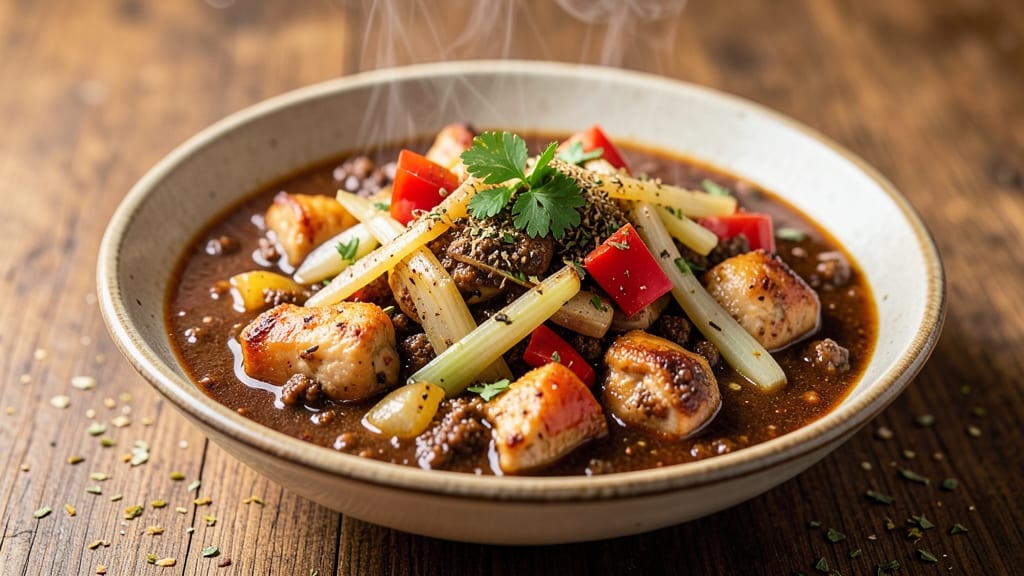
This traditional chicken gumbo recipe delivers the deep, smoky soul of Louisiana in every spoonful—where a perfectly browned roux meets tender chicken and okra-rich broth. Growing up in small-town Georgia, I learned that gumbo isn’t just a stew; it’s a celebration of layered flavors built over hours of simmering.
The secret lies in patience: letting the roux develop that signature dark mahogany hue while the holy trinity of onions, celery, and bell peppers forms the aromatic base.
The magic happens in the slow simmer, where chicken breaks down into fork-tender pieces and okra thickens the broth into a velvety embrace.
This isn’t a quick weeknight meal—it’s a weekend project that rewards you with a dish so rich and complex, guests will ask for seconds before the last bite disappears. The spices—thyme, bay leaves, and a whisper of cayenne—balance smokiness with warmth, creating harmony that defines Southern comfort food.
By the time you serve it steaming over a bed of buttery rice, with crusty bread on the side and hot sauce ready for those who crave extra heat, you’ll understand why gumbo has been the heart of Louisiana gatherings for generations.
Every spoonful tells a story of tradition, technique, and the kind of flavors that linger long after the last drop is gone. Let’s build this masterpiece together.
For those who want to elevate it further, a splash of lemon juice at the end brightens the depth, while fresh parsley adds a pop of color and freshness.
The key is confidence—don’t rush the roux, and trust the process. This is how you honor the dish’s roots while making it your own. Now, let’s get cooking.
Ingredients for traditional chicken gumbo
Sixteen ingredients. One deep, smoky flavor explosion. Let's make gumbo.
| Ingredient | Amount | Notes |
|---|---|---|
| Chicken Thighs 🍗 | 2 ½ lb | Bone-in, skin-on preferred |
| All-Purpose Flour 🌾 | ½ cup | White or whole wheat |
| Vegetable Oil 🫒 | ½ cup | For roux development |
| Yellow Onions 🧅 | 2 whole | Diced, medium size |
| Green Bell Peppers 🍆 | 2 whole | Diced, medium size |
| Celery Stalks 🥬 | 3 whole | Diced, medium size |
| Garlic Cloves 🧄 | 4 cloves | Minced, fresh preferred |
| Fresh Okra 🌱 | 1 lb | Sliced into rounds |
| Dried Thyme 🌿 | 1 tbsp | Or 1 tbsp fresh thyme |
| Bay Leaves 🍃 | 2 whole | Fresh or dried |
| Cayenne Pepper 🌶️ | ½ tsp | Adjust for heat preference |
| Salt 🧂 | 2 tsp | Kosher or sea salt |
| Black Pepper 🌶️ | 1 tsp | Freshly ground preferred |
| Chicken Broth 💧 | 4 cups | Low-sodium preferred |
| Lemon Juice 🍋 | 1 tbsp | Freshly squeezed |
| Fresh Parsley 🌿 | ¼ cup | Chopped, for garnish |
| Hot Sauce 🔥 | 2 tbsp | Optional, for serving |
The roux is everything—don't skimp on the flour or oil. Gold Medal all-purpose flour works best, and Crisco or vegetable oil gives that classic color. For the holy trinity, grab yellow onions, green bell peppers, and celery—all from the same store brand to keep flavors consistent. Fresh okra is ideal, but frozen works in a pinch (thaw first). Trader Joe's often has great pre-sliced okra if you're short on time. The chicken? Bone-in, skin-on thighs stay juicier—Costco or local butchers usually have them at a good price. Look for thighs with good marbling for extra flavor.
No fresh thyme? Dried works at the same amount, but fresh has more complexity. Running low on bay leaves? Two dried leaves equal one fresh. The cayenne is where you control the heat—start with half a teaspoon and add more if your crowd loves spice. For the broth, low-sodium is key—you'll be adding plenty of salt. No chicken broth? Vegetable broth with 1 tbsp soy sauce mimics the umami. The okra can be chopped or left whole—it'll break down as it cooks. If you're feeling adventurous, add a smoked sausage link to the roux for extra depth.
Gumbo tastes even better the next day, so make extra. Keeps 4-5 days in the fridge or 3 months frozen. For serving, I always portion it into individual bowls with rice on the side—just reheat with a splash of broth if it thickens too much. The parsley adds freshness, but don't skip the hot sauce on the table—Crystal or Tabasco are classic choices. Leftovers reheat beautifully—just stir in a little broth if it gets too thick.
Why You'll Love This Recipe
- One-Pot Magic: I swear by this recipe because it’s all about the roux—just flour and oil simmered until it’s that perfect nutty brown. No extra pans, no mess, and honestly? That deep, rich base does 90% of the flavor work for you.
- Deep, Soulful Taste: The chicken thighs get tender while the bell peppers and onions caramelize right in the pot. That smoky-sweet balance? It’s the kind of flavor that makes you want to eat it straight from the spoon—no shame.
- Leftovers That Shine: Between us, gumbo only gets better the next day. The flavors meld even more, and reheating it? Just add a splash of water, stir, and boom—you’ve got dinner again. My freezer’s full of it, and I’m not complaining.
- Budget-Friendly Feast: Chicken thighs and basic veggies stretch into a meal that feeds four for under $15. Plus, the roux trick means you’re not drowning in expensive shortcuts. It’s the kind of dish that makes you feel like you’re treating people without breaking the bank.
Step-by-step instructions for traditional chicken gumbo
Here's how to build this rich, smoky gumbo with a perfect dark roux and okra's signature texture.
Develop the Dark Roux
Heat the 0.5 cup vegetable oil in a large, heavy-bottomed pot over medium-low heat. Add the 0.5 cup all-purpose flour all at once and stir constantly with a wooden spoon. This is where patience pays off—don't rush this step.
Watch the roux carefully as it transforms from pale to peanut butter color, then deep chocolate brown. This should take about 20-25 minutes. The key is constant stirring to prevent burning. When it reaches a rich, dark mahogany color with a nutty aroma, you're ready for the next step. If it smells like burnt toast, start over—it won't work properly.
Cook the Holy Trinity and Chicken
Add the diced yellow onions, green bell peppers, and celery stalks to the roux and cook for 5 minutes, stirring frequently. This combination is called the "holy trinity" in Cajun cooking, and it forms the flavor base of gumbo. The vegetables should soften slightly but still retain their shape.
Push the vegetables to the side of the pot and add the 2.5 lb chicken thighs, skin-side down. Cook for 8-10 minutes until the skin is golden brown and crispy. Flip the chicken and cook for another 5 minutes until the meat is no longer pink on the outside. Remove the chicken and set aside on a plate, leaving the juices in the pot.
Build the Gumbo Base
Add the 4 cloves minced garlic, 1 lb sliced fresh okra, 1 tbsp dried thyme, 2 whole bay leaves, 0.5 tsp cayenne pepper, 2 tsp salt, and 1 tsp black pepper to the pot. Stir well to combine with the roux and vegetables. Cook for 5 minutes to allow the flavors to meld together.
Pour in the 4 cups chicken broth and bring the mixture to a gentle simmer. Let it cook uncovered for 20 minutes, stirring occasionally. This step allows the okra to soften slightly and release its natural thickening properties. You'll notice the gumbo becoming thicker and more flavorful as it simmers.
Finish and Serve
Return the chicken to the pot and simmer for another 15-20 minutes until the chicken is cooked through and tender. The chicken should easily pull apart at the bone. Use two forks to shred the chicken directly in the pot, leaving some pieces intact for texture.
Stir in the 1 tbsp lemon juice and taste the gumbo. Adjust seasoning if needed—you might need a bit more salt or cayenne to balance the flavors. Remove the bay leaves before serving. Ladle the gumbo into bowls and garnish with 0.25 cup chopped fresh parsley. Serve with 2 tbsp hot sauce on the side for those who like extra heat.
Pro Tips For Making Traditional Chicken Gumbo
- Brown the Thighs Deep: Don’t just sear—get those chicken thighs to a rich, caramelized crust before pulling them out. I used to rush this, and the gumbo always tasted like it needed more depth. Five minutes per side on medium-high heat, until the skin’s dark golden and the fat runs clear when you cut into it.
- Sweat, Don’t Sauté: When cooking onions and bell peppers, keep the heat low and let them release moisture first. High heat turns them bitter, and that’s a flavor you can’t fix later. Cover the pot for the first 3-4 minutes to help them soften without sticking—yes, even if you’re impatient like me.
- Skip the Crowding: Overloading the pot with chicken and veggies steams the roux instead of building it. Work in batches if needed—start with just the oil and flour, then add onions and peppers once the roux is a peanut butter color. Trust me, that nutty aroma is worth the wait.
- Save the Skimmed Fat: After browning the chicken, don’t pour off all that golden fat—leave at least 2 tablespoons in the pot. It’s liquid gold for the roux, giving it richness without extra oil. (Yes, even if it looks messy—this isn’t the prettiest method, but it’s the tastiest.)
Perfect pairings for these flavors
Roux-Ready Sides
Nothing complements gumbo like a crusty French bread or cornbread to soak up those rich, smoky flavors. I always keep a batch of sourdough from my local bakery on hand—its tangy crust cuts through the gumbo's depth beautifully.
For a Southern twist, try stone-ground cornmeal muffins with a touch of jalapeño for heat. 🥖
Creamy Contrasts
A dollop of cooling buttermilk biscuits or cheesy grits balances the gumbo's intensity. I like to serve stone-ground grits with a pat of cultured butter and a sprinkle of smoked paprika—the creaminess contrasts perfectly with the okra's texture.
For extra indulgence, top with sharp cheddar and a drizzle of honey for a sweet-savory note.
Classic Drink Pairings
Sip on a chilled sweet tea—the Southern staple that cleanses your palate between bites. For something stronger, a bourbon cocktail like a Whiskey Sour (with Evan Williams bourbon, fresh lemon, and simple syrup) enhances the gumbo's depth.
If you prefer beer, a light lager like St. Pauli Girl keeps the flavors bright without overpowering. 🍹
Spicy Kick Add-Ons
Set out hot sauce (I swear by Crystal or Tabasco) and pickled jalapeños for those who crave extra heat. For a smoky twist, serve smoked paprika-dusted tortilla chips on the side.
If you're feeling adventurous, add pickled okra or pickled onions—their tang cuts through the gumbo's richness like a knife.
Fresh Finishing Touches
Garnish each bowl with chopped green onions and fresh parsley for a pop of color and freshness. A squeeze of lemon wedge brightens the dish at the table, while toasted breadcrumbs add crunch.
For a restaurant-worthy touch, drizzle with avocado oil and sprinkle flaky sea salt—it elevates the whole experience. 🌿
Nutrition facts
Frequently asked questions
Why does gumbo need a dark roux?
The dark roux is the soul of gumbo—it develops deep, nutty, almost caramelized flavors that create the signature richness. A dark mahogany color (about 20-25 minutes of cooking) adds complexity that lighter rouxes can't match. This is why traditional gumbo tastes so much more layered than quick versions.
Can I make gumbo without okra?
While okra adds natural thickening and a slight tang, you can substitute 1 tbsp filé powder (ground sassafras) or 1/4 cup cornstarch mixed with water. For a seafood gumbo, omit both and let the broth reduce naturally. The key is building the roux properly—it's the real flavor anchor.
How do I fix a burnt roux?
If your roux smells like burnt toast, it's ruined—start over! The good news is you only need 0.5 cup flour and 0.5 cup oil. Work quickly: heat oil on medium-low, add flour all at once, and stir constantly. Keep the heat low to prevent burning. Patience is key—this step makes or breaks your gumbo.
What's the best way to reheat gumbo?
Reheat gently on the stove over low heat, stirring occasionally and adding 1/4 cup broth if it thickens too much. Microwaving can make it rubbery. For best results, reheat only what you need and serve immediately. Gumbo tastes even better the next day when flavors meld further.
Can I make this gumbo in a slow cooker?
While possible, gumbo is best made stovetop to control the roux development. If you must use a slow cooker, make the roux separately on the stove first, then transfer everything to the slow cooker and cook on low for 6-8 hours. The texture will be slightly different but still delicious. Traditional gumbo is a labor of love—don't rush it!