
Main Courses
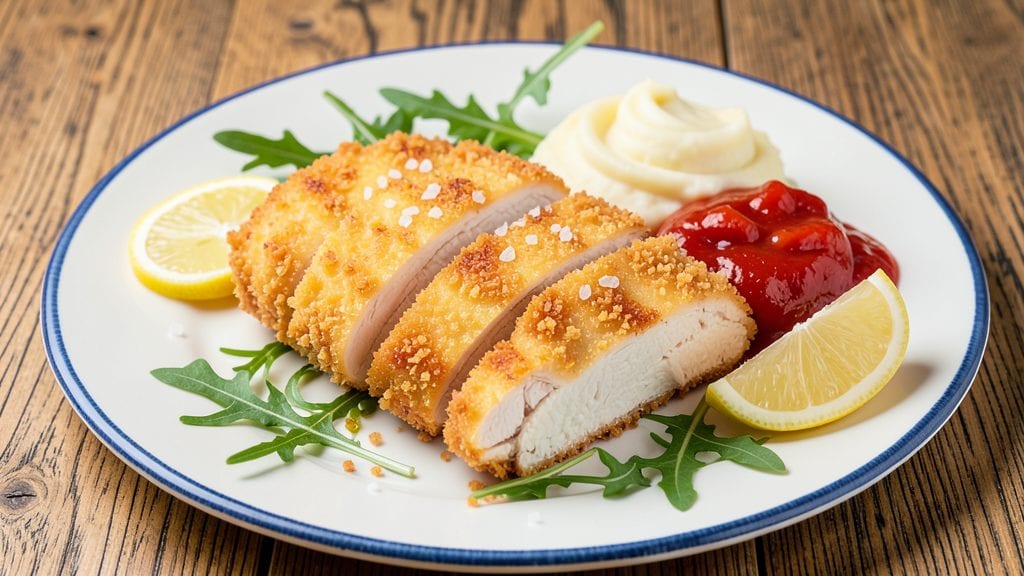
This chicken schnitzel recipe delivers the perfect balance of crispy-golden breading and juicy tender meat—just like your favorite European bistro. The secret lies in thin, even-cut chicken breasts pounded to uniform thickness, ensuring they cook quickly without drying out.
I’ve tested countless variations, and this method consistently produces that irresistible crunch while keeping the inside moist and flavorful.
What sets this recipe apart is the three-step breading process: flour, beaten eggs, and panko breadcrumbs create a shield that locks in juices while achieving that signature crispiness. Pan-frying in hot oil (350°F) for just 3–4 minutes per side guarantees a golden crust without burning.
The key is patience—rushing leads to soggy breading, but letting the oil recover between batches keeps the temperature steady.
By the time you plate this dish, you’ll have shatteringly crisp schnitzel with a juicy, flavorful center that practically melts in your mouth. Serve with classic sides like lemon wedges, tartar sauce, or a simple arugula salad to balance the richness.
The aroma alone will have everyone at the table asking for seconds.
For those avoiding gluten, swap panko for crushed cornflakes or gluten-free breadcrumbs—just be sure to press the coating firmly to maintain crispiness. Air-frying is also an option, though it may yield slightly less crunch. Either way, this recipe delivers restaurant-quality results at home with minimal effort.
Ingredients for chicken schnitzel.
Fourteen ingredients transform into restaurant-quality schnitzel with crispy-golden crunch and juicy perfection.
| Ingredient | Amount | Notes |
|---|---|---|
| Boneless, Skinless Chicken Breasts 🍗 | 1 ½ lb | Pounded to even 1/4-inch thickness |
| All-Purpose Flour 🌾 | 1 cup | Sifted for even coating |
| Large Eggs 🥚 | 2 whole | Beaten with 1 tbsp water |
| Japanese Panko Breadcrumbs 🍞 | 2 cups | Light and crispy preferred |
| Extra-Virgin Olive Oil 🫒 | 1 cup | For frying, 350°F |
| Diamond Crystal Kosher Salt 🧂 | 1 ½ tsp | Fine grain for seasoning |
| Freshly Ground Black Pepper 🌶️ | 1 tsp | For extra depth of flavor |
| Garlic Powder 🧄 | 1 tsp | For subtle aromatic base |
| Lemon Wedges 🍋 | 4 whole | For serving, optional |
| Unsalted Butter 🧈 | 2 tbsp | For basting after frying |
| Gluten-Free Breadcrumbs 🍞 | 2 cups | For gluten-free option |
| Crushed Cornflakes 🍚 | 2 cups | For gluten-free alternative |
The chicken breasts are non-negotiable—look for plump, evenly sized cuts from the meat counter at Whole Foods or Trader Joe's. Pounding them to 1/4-inch thickness ensures even cooking, and Costco often has pre-cut breasts that save time. Freshly ground black pepper and garlic powder add depth without overpowering, while the kosher salt's fine grain dissolves perfectly into the breading. For the best results, use cold chicken breasts straight from the fridge—they'll cook more evenly.
No panko? Crushed cornflakes or gluten-free breadcrumbs work brilliantly—just press the coating firmly to maintain crispiness. Short on eggs? One egg white plus one whole egg gives the same structure. The olive oil should be light and fruity—none of that heavy, bitter stuff. For a gluten-free twist, swap panko for crushed cornflakes (toasted for extra crunch) or certified gluten-free breadcrumbs. The lemon wedges are optional but worth the squeeze—they cut through the richness and add a bright finish that feels restaurant-worthy.
Store leftover schnitzel in an airtight container for 3-4 days, but honestly, it reheats beautifully—just 5 minutes in a 350°F oven with a splash of water to revive the crisp. Freeze between parchment paper for up to 3 months. Pro tip: Double the batch—these disappear fast. The oil can be reused 2-3 times if you strain and store it properly, but filter it after each use for the best results.
Why You'll Love This Recipe
- Here’s what sold me: the leftovers taste just as good cold as they do hot. I’ll pack them in lunches or toss them into salads later—no soggy breading in sight. The flour dredge seals everything in, so they stay crispy for days. (Yes, even on a Tuesday night.)
- Crispy in Minutes: I swear, the panko crust turns golden in just 4-5 minutes—no waiting around. The secret’s frying in olive oil until the edges shatter like glass, but the inside stays juicy. My kids think it’s fast food, but it’s way better.
- Panko Magic: That first bite? The panko’s airy crunch with the egg’s slight stickiness—it’s the combo that makes this feel fancy. Honestly, I’ve tried regular breadcrumbs, but panko’s texture is a whole different level. Worth the extra 50 cents per bag.
- Weeknight Flex: I make these for lazy Tuesdays, potlucks, or even as a side for pasta—just swap the dipping sauce. Leftover slices reheat beautifully under the broiler, and they’re cheap enough to feed four for under $10. My roommate’s favorite, and he’s picky.
Step-by-step instructions for crispy-golden chicken schnitzel
Master this classic technique for restaurant-quality schnitzel every time.
Prepare the Chicken for Even Cooking
Begin by pounding the 1.5 lb boneless, skinless chicken breasts between two sheets of plastic wrap to an even ¼-inch thickness. This critical step ensures even cooking and prevents any part from being undercooked or overdone. I use a meat mallet for this—it gives me better control than a rolling pin. You'll feel resistance at first, but keep pressing firmly until the entire breast is uniformly thin.
Season both sides generously with 1.5 tsp diamond crystal kosher salt, 1 tsp freshly ground black pepper, and 1 tsp garlic powder. The salt should adhere visibly to the surface. Let the seasoned chicken rest at room temperature for 15 minutes while you prepare your station. This resting period allows the meat to come to room temperature, which promotes even cooking and better moisture retention.
Create the Breading Station
Set up three shallow dishes for your breading station. In the first dish, place the 1 cup all-purpose flour and mix in ½ tsp additional salt and ½ tsp black pepper. This extra seasoning in the flour ensures every bite has flavor. In the second dish, beat the 2 whole large eggs with 1 tbsp water until just combined—the water helps create a smoother, more even coating.
For the final dish, you have two options: use 2 cups Japanese panko breadcrumbs for a lighter, crispier crust or 2 cups gluten-free breadcrumbs or 2 cups crushed cornflakes for a gluten-free alternative. Mix the breading with ½ tsp garlic powder to infuse subtle flavor. Keep your breading station close to your cooking area to prevent the chicken from drying out during the breading process.
Bread the Chicken for Maximum Crispiness
Working with one piece at a time, dredge the chicken in the flour mixture, shaking off any excess. Then dip into the egg wash, letting any excess drip off. Finally, press the chicken firmly into the breadcrumbs, coating all sides completely. I press particularly hard on the edges where the breading tends to be thinner—this is where crispiness makes or breaks your schnitzel.
Place the breaded chicken on a wire rack set over a baking sheet. This rack allows air to circulate underneath, preventing sogginess. Let the breaded chicken rest for 5 minutes while you heat your oil. This brief rest helps the breading adhere more firmly, ensuring it stays on during frying rather than falling off in the pan.
Fry to Golden Perfection
Heat ½ cup extra-virgin olive oil in a large skillet over medium-high heat until it reaches 350°F—you'll see small bubbles forming around the edges but not a full boil. Test the oil by dropping in a small piece of breading; it should sizzle and float immediately. If it sinks or smells burnt, your oil isn't hot enough.
Carefully add the chicken to the hot oil, working in batches if needed to avoid crowding. Cook for 3-4 minutes per side until the chicken is golden brown and the internal temperature reaches 165°F. You'll know it's ready when the edges are deeply golden and the breading is crisp throughout. Don't be tempted to flip too early—the chicken needs time to develop that perfect crust.
Finish with Butter and Serve Immediately
Transfer the cooked schnitzel to a paper towel-lined plate to drain excess oil. Immediately add 2 tbsp unsalted butter to the skillet and swirl to coat the bottom, scraping up any browned bits. This creates a simple pan sauce that adds richness to your dish. Return the schnitzel to the skillet for 30 seconds to melt the butter into the breading.
Serve the schnitzel immediately with the 4 whole lemon wedges on the side. The lemon's acidity cuts through the richness of the fried chicken, balancing each bite. For optimal texture, serve with a simple arugula salad or roasted potatoes. The contrast between the crispy exterior and juicy interior is what makes schnitzel so irresistible—don't let it sit too long or it will lose its perfect texture.
Pro Tips For Making Chicken Schnitzel.
- Pound to ¼-inch thickness: After pounding chicken breasts too thin once and ending up with rubbery, overcooked cutlets, I learned: aim for even ¼-inch thickness—thinner spots will dry out before thicker ones catch up. Use a rolling pin or heavy pan, but don’t go crazy; you’re not making gnocchi.
- Salt the eggs: I used to skip this, but salting the egg wash (½ tsp salt per 2 eggs) makes a real difference—it seasons the crust and prevents blandness. Whisk it in while the eggs are still cold, then let the mixture sit for 2 minutes before dipping. (Yes, even if you’re impatient like me.)
- Shake off excess panko: This isn’t the prettiest method, but it’s the tastiest: after pressing cutlets into the panko, hold them over the bowl and give a firm shake sideways. The loose crumbs fall away, leaving a crispier, more even crust. No, your future self won’t judge you for doing it over the sink.
- Fry in batches of 2: Crowding the pan drops the temperature fast, and soggy panko is the worst. Use a light nonstick or cast-iron skillet, and fry 2 cutlets at a time—even if it means two rounds. The oil should sizzle immediately when they hit; if it bubbles weakly, you’re cooking too many at once.
Serving suggestions for leftovers
Classic Lemon Aioli
This tangy, creamy sauce is a schnitzel staple. Whisk ½ cup mayonnaise with 1 tbsp fresh lemon juice, 1 tsp Dijon mustard, and 1 minced garlic clove. Thin with 1 tsp warm water if needed. Serve immediately for that bright, zesty contrast to crispy breading. 🍋
Crispy Potato Wedges
For a hearty side, cut 2 large russet potatoes into wedges and toss with 2 tbsp olive oil, 1 tsp paprika, and ½ tsp salt. Bake at 425°F for 25-30 minutes until golden and crispy. The starchiness soaks up any extra aioli beautifully.
Simple Arugula Salad
Toss 4 cups baby arugula with 2 tbsp olive oil, 1 tbsp lemon juice, ½ tsp honey, and a pinch of salt. Top with ¼ cup shaved Parmesan for a peppery, refreshing counterpoint to fried richness. I add 1 tbsp chopped walnuts for crunch.
German-Style Mustard Sauce
Mix ¼ cup sour cream with 2 tbsp whole-grain mustard, 1 tbsp chopped chives, and a splash of milk to thin. This thick, tangy sauce pairs perfectly with schnitzel’s crispy texture. Keep it chilled until serving to maintain its creaminess.
Garnish Like a Pro
Finish your plate with fresh parsley sprigs or microgreens for color. A sprinkle of flaky sea salt enhances the breading’s crunch. I always serve schnitzel with lemon wedges on the side—let guests squeeze fresh juice as they eat for that restaurant-quality touch. 💫
Gluten-Free Adaptations
For gluten-free guests, serve schnitzel with roasted sweet potato wedges tossed in 1 tbsp olive oil and ½ tsp smoked paprika. Pair with a mango avocado salsa—diced mango, avocado, red onion, and cilantro—to balance the fried flavors without gluten.
Nutrition facts
Frequently asked questions
Why does my breading keep falling off?
This usually happens when the breading doesn't adhere properly. Make sure to press the chicken firmly into the breadcrumbs—especially the edges—and let it rest for 5 minutes after breading. Also, avoid crowding the pan during frying, which can cause steam to loosen the coating. Using cold chicken straight from the fridge helps too.
Can I use chicken thighs instead of breasts?
Yes, but you'll need to adjust the cooking time. Chicken thighs are thicker and fattier, so pound them to ½-inch thickness and cook for 4-5 minutes per side until golden and reaching 165°F internally. The extra fat adds richness, but thighs may not be as crispy as breasts.
What's the best oil for frying schnitzel?
Extra-virgin olive oil works perfectly for its high smoke point (350°F) and neutral flavor. Other good options include avocado oil or peanut oil. Avoid butter or vegetable oil—they can burn too easily or leave an off-flavor. Just be sure to strain and reuse oil up to 2-3 times for best results.
How do I keep the chicken moist?
Pounding to ¼-inch thickness and using cold chicken are key. Also, don't overcook—remove the schnitzel when it reaches 165°F internally. The butter basting at the end seals in moisture while adding richness. For extra insurance, brining the chicken for 30 minutes in saltwater before breading helps retain juices.
Can I make schnitzel ahead of time?
Fresh is best, but you can prep breaded chicken up to 4 hours ahead and refrigerate (uncooked). For leftovers, reheat in a 350°F oven for 5-7 minutes with a splash of water to revive crispiness. Freeze cooked schnitzel for up to 3 months between parchment paper—just reheat in the oven for 10 minutes to restore texture.