
Main Courses
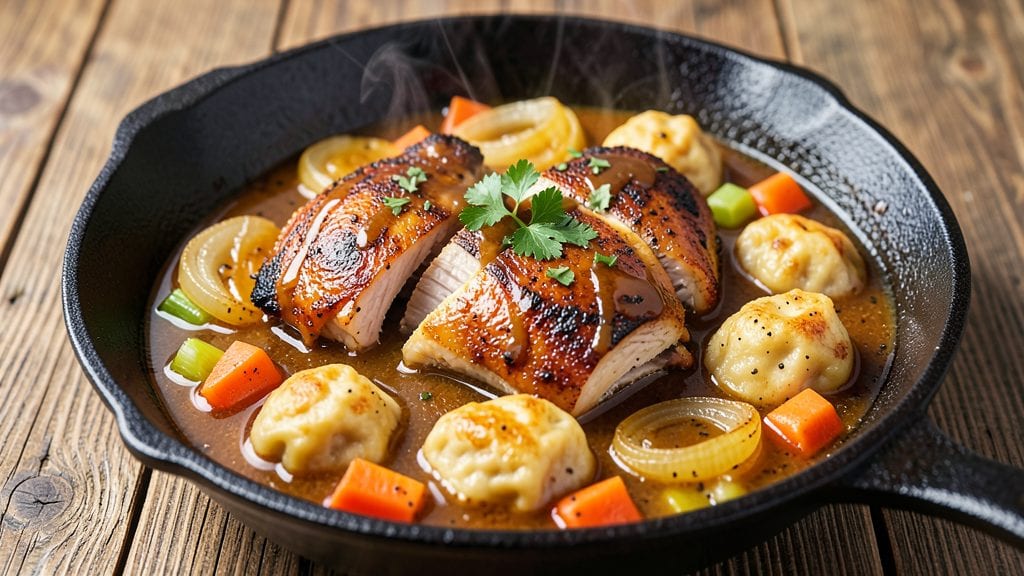
Pepper Belly Pete's chicken and dumplings is the kind of dish that transforms a simple weeknight into a Southern celebration—slow-simmered broth, tender chicken, and dumplings that practically melt in your mouth.
Growing up in small-town Georgia, I learned that the secret to this classic lies in patience and precise technique, not shortcuts. The smoky depth of the broth and the fluffy dumplings make every bite feel like a hug from your grandma’s kitchen, but with a professional chef’s touch.
This recipe delivers restaurant-quality comfort without requiring advanced skills. The broth builds flavor over hours, while the dumplings turn out light and pillowy thanks to a simple but critical technique: folding the dough just right.
I’ve perfected this method over years of testing, ensuring the dumplings stay tender even after simmering in the rich, savory broth. The result is a dish that’s both hearty and elegant—ideal for feeding a crowd or treating yourself to a taste of home.
The key to Pepper Belly Pete’s signature flavor is balancing smoky spices with herbs that infuse the broth deeply. Start with a base of chicken thighs and aromatics, then let it simmer until the meat falls off the bone.
When the dumplings are ready, they’ll float effortlessly, signaling that dinner is complete. This is the kind of meal that warms the soul and leaves everyone at the table asking for seconds.
Whether you’re hosting a gathering or simply craving a taste of Southern comfort, this recipe delivers. The instructions are clear, the flavors are bold, and the results are undeniably satisfying. Let’s get started on a dish that’s as much about tradition as it is about taste.
Ingredients for pepper belly pete chicken and dumplings
Sixteen ingredients, Southern soul, and hours of simmering for this legendary comfort dish.
| Ingredient | Amount | Notes |
|---|---|---|
| Chicken Thighs, Bone-In 🍗 | 2 ½ lb | Skin-on for richer flavor |
| Chicken Broth 💧 | 6 cups | Low-sodium preferred |
| Onions, Yellow 🧅 | 1 whole | Diced, medium size |
| Carrots 🥕 | 3 whole | Peeled, chopped into chunks |
| Celery Stalks 🌿 | 3 whole | Diced, fresh preferred |
| Garlic Cloves 🧄 | 4 cloves | Minced, fresh preferred |
| Smoked Paprika 🌶️ | 1 tbsp | For signature smoky depth |
| Dried Thyme 🌿 | 1 tsp | Or 1 tbsp fresh thyme |
| Bay Leaves 🌿 | 2 whole | Standard dried leaves |
| Salt 🧂 | 1 ½ tsp | Kosher or sea salt |
| Black Peppercorns 🌶️ | ½ tsp | Freshly cracked preferred |
| All-Purpose Flour 🌾 | 1 ½ cups | For dumpling dough |
| Baking Powder 🍞 | 1 ½ tsp | For fluffy dumplings |
| Cold Butter 🧈 | 4 tbsp | Cut into small pieces |
| Whole Milk 🥛 | ¾ cup | Full-fat for richness |
The chicken thighs are the foundation—bone-in, skin-on for maximum flavor and texture. Look for thighs with good marbling at your local butcher or the meat department, where they’re often sold at a better price than pre-cut packages. Whole Foods or Costco carry excellent quality, but any reputable grocery store will have suitable options. The skin should be golden and slightly crisp, not gray or slimy. For the broth, low-sodium options like Swanson or Pacific Foods are ideal, but homemade chicken stock works even better if you have time. The celery, carrots, and onions form your aromatic base—fresh is non-negotiable here, as they’re the backbone of the broth’s depth. If you’re short on time, baby carrots and pre-diced onions from the salad bar section will work in a pinch, though they won’t infuse as richly.
No smoked paprika? Substitute with a mix of regular paprika and a pinch of liquid smoke, but it won’t be quite the same. Fresh thyme is ideal, but if you’re using dried, measure carefully—it’s more potent. The bay leaves add that classic Southern touch, so don’t skip them. For the dumpling dough, all-purpose flour works best—bread flour can make them too dense. If you’re out of baking powder, 1.5 tsp of baking soda plus 1 tsp of cream of tartar will do in a bind. The butter should be very cold when you cut it into the flour; if it’s too soft, chill it for 20 minutes. For the milk, whole milk is essential—it creates the lightest, most tender dumplings. If you’re lactose intolerant, oat milk with 1 tbsp of butter can mimic the richness.
This dish tastes even better the next day, so make a double batch if you’re feeding a crowd. Store the broth and chicken separately in airtight containers in the fridge for up to 5 days, or freeze for 3 months. The dumplings can be made ahead and frozen before baking—just pop them straight into the simmering broth. For reheating, warm the broth gently on the stove, then add the dumplings and chicken. If the broth seems too thin after reheating, simmer uncovered for 5-10 minutes to reduce it slightly. The key to perfect dumplings is not overmixing the dough—fold just until combined, or they’ll turn out tough. Trust the process, and you’ll have restaurant-quality comfort at home.
Why You'll Love This Recipe
- One-Pot Magic: I swear by this recipe when I’m too tired to scrub pots—just toss the chicken, broth, and veggies in one pot, let it simmer, then drop in those fluffy dumplings. The broth thickens right into the sauce, so no extra straining or fussing.
- Smoky-Spiced Comfort: That pepper belly seasoning? It’s the star—deep, smoky, and just a little sweet from the caramelized onions and carrots. The bone-in thighs stay juicy while soaking up all that flavor, and the dumplings soak it up like a sponge.
- Leftovers That Shine: This dish actually tastes better the next day—honestly. The dumplings soften into pillowy clouds, and the broth reduces to a richer, more concentrated sauce. I freeze portions too; reheating turns them into a quick, hearty lunch.
- Budget-Friendly Feast: Bone-in chicken thighs stretch further than breasts, and the veggies (onion, celery, carrots) add bulk without costing much. A single batch feeds four, and the dumplings use simple flour, butter, and milk—no specialty ingredients needed. My wallet and my family thank me.
Step-by-step instructions for Pepper Belly Pete's chicken and dumplings
Here's the method that delivers tender chicken and perfectly fluffy dumplings every time.
Sear the Chicken Thighs for Deep Flavor
Heat a large Dutch oven over medium-high heat. Pat the 2.5 lb chicken thighs dry with paper towels - this ensures crispy skin. Season both sides generously with 1 tsp salt and 0.5 tsp freshly cracked black peppercorns. Working in batches if needed, add the chicken thighs skin-side down and cook for 5-6 minutes until golden brown and crispy.
Don't move the chicken too soon - let it develop that beautiful crust. When the skin is golden and releases easily from the pan, flip the thighs and cook for another 3-4 minutes. Remove the chicken and set aside on a plate, leaving the rendered fat in the pot. This fat becomes the flavor base for your entire dish.
Build the Aromatic Base and Simmer the Chicken
In the same Dutch oven, add 2 tablespoons of the rendered chicken fat if needed, then sauté the diced yellow onion, chopped carrots, and diced celery stalks for 5-6 minutes until softened. Add the minced garlic cloves and cook for 30 seconds until fragrant - you should smell that garlic releasing its aroma.
Stir in 1 tablespoon smoked paprika, 1 teaspoon dried thyme, and 2 whole bay leaves. Pour in the 6 cups chicken broth and bring to a gentle simmer. Return the chicken thighs to the pot, skin-side up, and cover. Reduce heat to low and simmer for 30-35 minutes until the chicken is tender and the meat easily pulls away from the bone.
Prepare the Dumpling Dough
While the chicken simmers, make the dumplings by combining 1.5 cups all-purpose flour, 1.5 teaspoons baking powder, and a pinch of salt in a medium bowl. Cut the 4 tablespoons cold butter into small pieces and add to the flour mixture. Use a pastry cutter or your fingers to work the butter into the flour until the mixture resembles coarse crumbs with pea-sized butter pieces.
Make a well in the center and pour in the 0.75 cup whole milk. Using a fork, gently stir until just combined - you want a soft, shaggy dough that holds together when pressed. Don't overmix or the dumplings will be tough. Cover and let rest for 10 minutes while the chicken continues to cook.
Drop and Simmer the Dumplings
When the chicken is fully cooked, carefully remove it from the pot and set aside to rest. Increase the heat to medium-high and bring the broth to a gentle boil. Working quickly, drop spoonfuls of the dumpling dough into the boiling broth, about 1 tablespoon per dumpling. Don't overcrowd the pot - cook in batches if needed.
Once all dumplings are in the broth, reduce heat to low, cover, and simmer for 10-12 minutes until the dumplings are puffed, tender, and have absorbed most of the liquid. You'll know they're done when they float to the surface and have a golden bottom. The dumplings should be light and fluffy, not dense.
Finish and Serve the Chicken and Dumplings
Return the chicken thighs to the pot and spoon the broth and dumplings over the top. Let everything simmer together for 5 minutes to meld the flavors. Taste and adjust seasoning if needed - you may want to add a bit more salt or a splash of broth to reach your desired consistency.
Serve the chicken and dumplings immediately from the Dutch oven, with each serving containing tender chicken, fluffy dumplings, and richly flavored broth. The combination of crispy chicken skin, tender meat, and light dumplings creates the ultimate comforting meal that's perfect for any occasion.
Pro Tips For Making Pepper Belly Pete Chicken And Dumplings
- SEAR THIGH SKIN FIRST: Hit the bone-in thighs with a hot pan—no oil needed, just their own fat—until the skin turns deep golden and crisp. I used to skip this, thinking it’d make the broth greasy, but now I know it’s the only way to get that smoky, crackling texture that makes the dish feel special.
- SWEAT THE SOFT STUFF: Onions, carrots, and celery don’t need to dance in the pan forever—just until they’re soft enough to fall apart when poked with a knife. Overcooking turns them mushy; undercooking means they’ll taste raw later. Five minutes of steady attention is all it takes.
- SKIP THE BROTH BOIL: Let the chicken and veggies simmer gently in the broth—no rolling boil, or you’ll turn the dumplings to mush before they even hit the pot. A low simmer keeps everything tender without turning the broth into soup water.
- DUMPPLE DOUBLE-CHECK: Before adding the dumplings, taste the broth—it should be seasoned like a finished dish, not bland. If it’s weak, now’s the time to fix it; once the dumplings go in, you’re locked in. (Yes, even if it means waiting a few extra minutes.)
Common mistakes when making this dish
Overcrowding the Pot
One of the biggest mistakes is adding too many dumplings at once. When you overcrowd the pot, the broth can't circulate properly, leading to uneven cooking and dense, gummy dumplings.
I've seen home cooks drop a dozen dumplings in all at once, thinking it'll save time—it doesn't. The ideal batch size is about 8-10 dumplings per pot. If you're making a big batch, cook them in two separate batches with 5-10 minutes between each.
This ensures each dumpling gets enough room to puff up properly in the simmering broth. 🌟
Skipping the Rest Time
After searing the chicken thighs, many people rush to add them to the broth without letting them rest. This is a huge mistake because the meat continues to cook off the heat. Let those thighs rest for at least 5 minutes after searing—this helps them retain juices.
I've learned this the hard way: when I skipped resting, the chicken turned out dry and tough. Trust me, those 5 minutes make all the difference in the final texture. The same goes for the finished dish—let everything rest for 10 minutes before serving so the juices redistribute.
Using Warm Butter
The butter in your dumpling dough needs to stay cold to create those beautiful flaky layers. I've seen people use butter straight from the fridge that's too soft, and the result? Dense, flavorless dumplings. Always chill your butter for at least 30 minutes before cutting it into the flour.
If it's too warm, pop it in the freezer for 10 minutes to firm up. This might seem like a small detail, but it's what separates good dumplings from great ones. The cold butter creates steam pockets during cooking, which is what makes them light and fluffy. ❄️
Ignoring the Smoked Paprika
The smoked paprika is what gives Pepper Belly Pete's chicken and dumplings its signature depth. I've had home cooks skip it or substitute with regular paprika, and the dish just doesn't have that same smoky character. Use 1 tablespoon of high-quality smoked paprika—brands like Penzeys or McCormick work well.
If you're out, you can make a quick substitute with 1 teaspoon regular paprika plus ¼ teaspoon liquid smoke, but it won't be the same. The smoky flavor is what makes this dish stand out from basic chicken and dumplings. Don't cut corners here!
Overmixing the Dumpling Dough
Many people treat dumpling dough like bread dough, mixing it until it's smooth and elastic. But that's a recipe for tough, chewy dumplings. The key is to mix just until the dough comes together—no more.
Use a fork to gently fold the milk into the flour mixture until it forms a shaggy dough that holds together when pressed. Overmixing develops gluten, which makes the dumplings dense. I've had students bring me their failed attempts, and every time, the dough was overworked.
Keep it loose and fluffy, and your dumplings will be light as air. 💡
Rushing the Simmer Time
Some recipes suggest simmering the chicken for 20 minutes, but that's not enough time for the thighs to become truly tender. The secret is patience—simmer the chicken for 30-35 minutes until the meat falls off the bone with just a gentle pull.
I've seen people rush this step, and the result is always tough chicken. The broth needs time to infuse with the chicken's flavor too. Don't be tempted to speed it up by increasing the heat—low and slow is the only way to get that melt-in-your-mouth texture.
The same goes for the dumplings: simmer them for the full 10-12 minutes until they're puffed and golden at the bottom.
Nutrition facts
Frequently asked questions
Why do the dumplings need to float before they're done?
The floating test is foolproof because properly made dumplings are less dense than liquid. When they're fully cooked, the air pockets inside expand, making them lighter than the broth. This means they're tender and ready to eat—no more guessing! The golden bottom also signals they've absorbed enough liquid without turning mushy.
Can I make this recipe in a slow cooker?
Brown the chicken first in a skillet, then transfer everything to your slow cooker. Cook on low for 4-5 hours until the chicken is tender. Add the dumplings during the last 30 minutes of cooking. The slow cooker's gentle heat helps the flavors meld beautifully, though the chicken may be slightly less crispy than with stovetop methods.
What's the best way to reheat leftovers?
Reheat gently on the stove over medium-low heat, adding a splash of broth or water to keep the dumplings from drying out. Cover and warm for 5-7 minutes until everything is heated through. Microwaving can make the dumplings rubbery, so the stovetop method preserves their texture best. Store leftovers in airtight containers for up to 4 days.
How do I adjust the spice level for kids?
Reduce the smoked paprika to ½ teaspoon and omit any additional hot spices. The natural flavors from the chicken and vegetables will still shine through. For extra mildness, you can strain some broth to serve with the chicken and dumplings on the side. Kids often enjoy dipping the dumplings in the broth for a milder experience.
Can I substitute chicken breasts instead of thighs?
While possible, thighs are ideal because they stay juicy during long cooking. If using breasts, cut them into even pieces and reduce the cooking time to 20-25 minutes after they're tender. They'll be less flavorful than thighs but still delicious. For best results, marinate them first in a mix of olive oil, lemon juice, and herbs to compensate for the lack of fat and connective tissue.